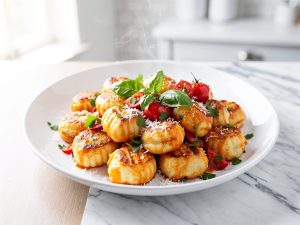
Fluffy Gluten-Free Gnocchi Recipe

If you’ve ever attempted Gluten-Free gnocchi only to end up with dense, gummy dumplings that sink like stones, you’ve encountered the cardinal sin of Gluten-Free Italian cooking: over-hydration combined with excessive starch.
Traditional gnocchi recipes rely on gluten’s elastic network to maintain structure while staying tender. Remove that gluten, and you’re left with a potato paste that turns rubbery the moment it hits boiling water.
The solution? A scientifically calibrated balance of potato starch, minimal moisture, and strategic binding agents that mimic gluten’s structural role without the chewiness.
This Gluten-Free gnocchi recipe delivers pillowy, tender dumplings in just 45 minutes total—no culinary degree required, just precision.
Table of Contents
Why This Recipe Works
| Typical Gluten-Free Gnocchi | Glutenoo Version |
|---|---|
| Heavy, gummy texture from excess moisture | Light and pillowy from dry-riced potatoes |
| Falls apart or turns mushy in water | Holds shape perfectly with xanthan gum structure |
| Grainy or chalky aftertaste | Smooth potato flavor from minimal flour |
| Requires multiple flour types | Works with any quality Gluten-Free blend |
The Science Behind Pillowy Gnocchi:
- Baked, Not Boiled Potatoes: Boiling introduces 10-15% additional water weight. Baking dehydrates the potato flesh, concentrating starches and reducing the need for compensatory flour (which creates density). The drier the potato, the less binder is required.
- Ricing While Hot: Potato starch granules gelatinize at 140°F. Ricing immediately after baking disrupts these granules before they can re-form into a gluey network, keeping the texture fluffy rather than paste-like.
- Xanthan Gum Replicates Gluten Strands: At just 0.3% by weight, xanthan gum creates a pseudo-elastic network. According to food science studies on hydrocolloids, this mimics gluten’s ability to trap steam and provide tensile strength without adding chewiness.
- Egg Yolk as Emulsifier: The lecithin in egg yolk binds water and starch molecules, creating a cohesive dough while the fat content tenderizes. Whole eggs add too much moisture; yolks provide richness with minimal liquid.
- Minimal Flour Ratio: Traditional gnocchi uses 20-25% flour by weight. We’ve reduced this to 15%, which prevents the chalky, heavy texture common in Gluten-Free pasta alternatives while still maintaining structural integrity.
🧪 Oliver’s Science Tip
“Did you know? Russet potatoes contain 18-22% starch compared to Yukon Golds at 14-16%. This higher amylose content creates a fluffier, less waxy texture. The amylose molecules align in parallel chains that trap air, producing that coveted pillowy bite. This ensures your gnocchi won’t collapse into dense nuggets.”

Ingredients
| Quantity | Ingredient | Oliver’s Notes |
|---|---|---|
| 2 lbs (900g) | Russet Potatoes (about 3 large) | High starch content is critical. Avoid waxy red or Yukon varieties. |
| 1 cup (140g) | Gluten-Free All-Purpose Flour Blend | Must contain xanthan gum OR add separately. King Arthur Measure for Measure or Bob’s Red Mill 1-to-1 work perfectly. |
| 1/2 tsp (2g) | Xanthan Gum | Only if your flour blend doesn’t include it. This is the gluten replacement. |
| 1 large | Egg Yolk (room temperature) | Save the white for another use. Yolk adds richness without excess moisture. |
| 1 tsp (6g) | Fine Sea Salt | Enhances potato flavor. Don’t use coarse salt—it won’t distribute evenly. |
| Extra for dusting | Potato Starch | For work surface. Potato starch creates less gumminess if overworked. |
Optional for Serving:
- Sage Brown Butter Sauce (4 tbsp butter, 8 fresh sage leaves)
- Simple Marinara (see our Easy Gluten-Free Lasagna for homemade sauce)
- Parmesan cheese, freshly grated
As an Amazon Associate and affiliate partner, I earn from qualifying purchases at no extra cost to you.
Essential Tools
- Digital Kitchen Scale: Precision is chemistry. In gluten-free baking, “1 cup” of flour can vary by 20% depending on how you scoop it. Using a scale ensures your dough hydration is scientifically perfect every time.
- Stainless Steel Potato Ricer: Do not use a hand masher. A masher crushes cells and releases sticky starch, creating gummy gnocchi. A ricer gently separates the flesh into fluffy particles, ensuring a pillowy texture.
- Stainless Steel Bench Scraper: This tool allows you to cut and manipulate the dough without using your warm hands, which can activate the starches and melt the delicate emulsion.
- Wooden Gnocchi Board: While a fork works, a wooden board with deep grooves creates better ridges. These ridges are crucial for holding sauce and maximizing flavor in every bite.
- Spider Strainer: Gluten-free gnocchi are more fragile than wheat ones. A wide spider strainer lets you gently lift them from the boiling water without breaking them, unlike a narrow spoon.
How to Make Gluten-Free Gnocchi Recipe
Phase 1: Prepare the Potatoes
- Bake the Potatoes: Preheat your oven to 400°F (200°C). Pierce each Russet potato 4-5 times with a fork (this releases steam and prevents explosions). Place directly on the oven rack with a baking sheet on the rack below to catch drips. Bake for 60-75 minutes until a knife slides through with zero resistance. The skin should be crispy and wrinkled—this indicates maximum moisture evaporation.
- Halve and Steam-Dry: The moment potatoes are cool enough to handle (wear an oven mitt if needed—hot is good here), slice them in half lengthwise. Place cut-side up on a baking sheet and return to the turned-off oven for 5 minutes. This step evaporates surface moisture that would otherwise make your dough sticky.
- Rice While Hot: Scoop out the flesh (discard skins or save for another use) and immediately push through your potato ricer onto a clean, lightly floured surface. Work quickly—you want the potatoes above 140°F to prevent starch retrogradation (the process in which cooled starch re-crystallizes into a gummy texture). Spread the riced potatoes into a thin layer to cool for 3-4 minutes, until they reach about 120°F—warm but not steaming.
Phase 2: Form the Dough
- Create a Well: Gather the riced potatoes into a mound. Make a wide well in the center (like a volcano crater). This technique, borrowed from traditional pasta-making, allows you to control the gradual incorporation of flour.
- Add Wet Ingredients: Place the egg yolk and salt into the well. Using a fork, gently beat the yolk while slowly dragging in the potato from the inner walls. You’re creating an emulsion before adding flour—this prevents dry pockets.
- Incorporate Flour Gradually: Sprinkle half the Gluten-Free flour over the potato mixture. Using your bench scraper in a cutting motion (not kneading—critical distinction), fold the flour into the potato. Add remaining flour in two additions, cutting and folding gently. The dough will look shaggy and slightly rough. Stop when it just comes together—it should be soft, slightly tacky, but not sticky enough to leave residue on your hands.
Phase 3: Shape the Gnocchi
- Divide the Dough: Using your bench scraper, cut the dough into 6 equal portions. Keep unused portions covered with a clean kitchen towel to prevent surface drying.
- Roll into Ropes: On a lightly floured surface, gently roll one portion into a rope about 3/4-inch (2cm) in diameter. Use a light touch—you’re guiding, not pressing. The rope should be uniform in thickness. Flouring your palms (not just the surface) prevents sticking without adding excess flour to the dough.
- Cut into Pillows: Using your bench scraper, cut the rope into 3/4-inch (2cm) pieces. Each piece should weigh about 15-18g if you want to be precise (this ensures even cooking).
- Create Ridges (Optional but Recommended): Hold a fork at a 45-degree angle, tines facing down. Place one gnocchi piece on the fork tines near the handle. Using your thumb, gently press and roll the gnocchi down the tines in one smooth motion. It should curl slightly and develop ridges. The indent from your thumb creates a sauce pocket. Place formed gnocchi on a lightly floured baking sheet in a single layer—don’t let them touch or they’ll stick together.
Phase 4: Cook to Perfection
- Boil Generously Salted Water: Fill a large pot (at least 6 quarts) with water and add 2 tablespoons of salt. The water should taste like the sea—this is your only chance to season the gnocchi’s interior. Bring to a rolling boil over high heat.
- Cook in Batches: Add 15-20 gnocchi at a time (overcrowding drops water temperature, causing uneven cooking). They’ll sink immediately. Do not stir for the first 30 seconds—let them set, or they’ll break apart. After 1-2 minutes, they’ll float to the surface. This is the signal they’re nearly done, but not quite there yet.
- The Float-Plus-30 Rule: Once gnocchi float, cook for an additional 30-45 seconds. This ensures the center is cooked through while the exterior remains tender (not mushy). Using your slotted spoon, gently transfer to a plate or directly into your sauce.
Phase 5: Sauce and Serve
- Toss Immediately in Sauce: For brown butter sage: In a large skillet over medium heat, melt 4 tablespoons butter until it foams and turns golden brown with a nutty aroma (about 3-4 minutes). Add 8 whole sage leaves—they’ll crisp in 30 seconds. Add cooked gnocchi directly to the pan (a little pasta water clinging to them is perfect—it creates a silky emulsion). Toss gently for 1 minute to coat and lightly crisp the edges.
Expert Tips for Success
- Test One Gnocchi First: Before committing your entire batch, boil a single test gnocchi. If it falls apart, your dough needs 1-2 more tablespoons of flour. If it’s dense or rubbery, you’ve overworked it or added too much flour—unfortunately, there’s no fix for this. Start over with a gentler touch.
- Freeze for Later: Raw gnocchi freeze beautifully. Arrange on a parchment-lined baking sheet, freeze until solid (2 hours), then transfer to a freezer bag. Cook directly from frozen—add 1 additional minute to the cooking time. They’ll keep for 3 months.
- Don’t Rinse After Cooking: Unlike regular pasta, gnocchi shouldn’t be rinsed. The surface starch helps the sauce adhere. Transfer directly from boiling water to the sauce using a slotted spoon, allowing excess water to drain for just 2-3 seconds.
- Altitude Adjustments: Above 5,000 feet, potatoes cook drier due to the lower boiling point. Reduce baking time by 10 minutes and check for doneness at 50 minutes to prevent over-drying.
Variations & Add-ins
- Vegan Gluten-Free Gnocchi: Replace the egg yolk with 2 tablespoons of aquafaba (chickpea liquid) whisked until frothy. The proteins in aquafaba bind similarly to egg whites, though you may need an extra tablespoon of flour to compensate for the additional liquid.
- Sweet Potato Gnocchi: Substitute sweet potatoes for Russets (same weight). Sweet potatoes contain more natural sugars and moisture—you’ll need to add an extra 3-4 tablespoons of flour. The result is slightly sweeter with a vibrant orange hue. Pair with brown butter and crispy prosciutto.
- Herb-Infused: Fold in 2 tablespoons finely minced fresh herbs (basil, parsley, or chives) after adding flour. Ensure herbs are completely dry—pat with paper towels—or they’ll introduce unwanted moisture.
- Dairy-Free Serving Options: Top with our gluten-free Dairy Free Mac and Cheese sauce, or toss with garlic-infused olive oil and nutritional yeast for a cheesy flavor without dairy.
Serving Suggestions
Gluten-Free gnocchi shines as the centerpiece of cozy, homemade gluten-free pasta alternatives.
For a classic Italian dinner, serve alongside our gluten-free Chicken Piccata with a crisp arugula salad dressed in lemon vinaigrette. The soft, pillowy texture contrasts beautifully with pan-seared proteins. These homemade potato dumplings also work wonderfully in browned butter with toasted pine nuts and Parmesan, or tossed in a simple marinara with fresh basil for an easy gluten-free dinner recipe.
For a heartier meal, nestle gnocchi into a bed of wild mushroom ragù and serve with our soft Gluten-Free Dinner Rolls to soak up the sauce.
Storing & Freezing
Refrigerator Storage: Cooked gnocchi will last 3-4 days in an airtight container in the refrigerator. Store unsauced if possible—the moisture from the sauce can make them soggy. Reheat gently in a skillet with butter or oil over medium heat for 2-3 minutes until warmed through. Avoid microwaving cooked gnocchi, as it can make them rubbery.
Freezing Raw Gnocchi: This is the preferred storage method. Freeze uncooked gnocchi on a parchment-lined baking sheet until solid (about 2 hours), then transfer to freezer bags, removing as much air as possible. Label with the date—they’re best within 3 months. Cook directly from frozen by adding them to boiling water; they’ll need an extra minute to cook through. Do not thaw before cooking, or they’ll become mushy.
Freezing Cooked Gnocchi: While possible, I don’t recommend it. Cooked gnocchi become dense and lose their pillowy texture when frozen and reheated. If you must, freeze in a single layer with parchment between layers, and reheat in a hot skillet with plenty of butter to revive texture.
Estimated Nutrition (Per Serving, 1 cup cooked gnocchi, about 150g)
| Nutrient | Amount |
|---|---|
| Calories | 220 kcal |
| Total Carbohydrates | 45g |
| Protein | 5g |
| Total Fat | 2g |
| Saturated Fat | 0.5g |
| Fiber | 3g |
| Sodium | 290mg |
| Potassium | 620mg |
Estimates by Glutenoo Test Kitchen based on USDA data for listed ingredients. Actual values may vary based on specific brands used. Nutrition does not include sauce or toppings.
Troubleshooting Guide
| Problem | The Science (Why) | The Fix |
|---|---|---|
| Gnocchi fall apart in water | Insufficient binder (xanthan gum or egg) or too much moisture in potatoes. The starch network can’t hold structure under agitation. | Ensure potatoes are baked, not boiled. Add 1-2 more tbsp flour to remaining dough. Test one gnocchi before cooking the batch. |
| Dense, heavy texture | Over-kneading activated starches, creating a tight, gluey network. Excessive flour also adds weight. | Use a lighter touch next time. Current batch can be salvaged by pan-frying in butter—the crispy exterior distracts from dense interior. |
| Gummy or sticky dough | Potatoes retained too much moisture (boiled instead of baked, or not steam-dried). Excess water prevents proper flour absorption. | Add flour 1 tbsp at a time until workable. Alternatively, spread dough on a baking sheet and refrigerate uncovered for 20 minutes to surface-dry. |
| Gnocchi sink and don’t float | Either undercooked (they will eventually float) or the dough is too dense from overworking, eliminating air pockets needed for buoyancy. | Wait an extra 30-60 seconds—they may be slower to cook. If still sunken after 4 minutes, remove and taste-test. If cooked through, proceed—they’re edible, just dense. |
| Mushy exterior | Overcooked. Starch granules have absorbed excess water and burst, losing structure. | Reduce cooking time. Remove 15 seconds after they float. Use a timer—precision matters with delicate Gluten-Free starches. |
| Grainy or gritty texture | Flour wasn’t fully incorporated, or you used a Gluten-Free blend with coarse rice flour. Unhydrated starch particles create grittiness. | Switch to a finely-milled flour blend (Bob’s Red Mill 1-to-1 or King Arthur Measure for Measure). Ensure dough rests 5 minutes before shaping to allow full hydration. |
Frequently Asked Questions
Can I make Gluten-Free gnocchi without xanthan gum?
Technically, yes, but I don’t recommend it for beginners. Xanthan gum provides the structural network that replaces gluten’s elasticity. Without it, you’ll need to compensate by adding an extra egg yolk and increasingthe flour by 2-3 tablespoons, which risks a denser texture. Some bakers substitute psyllium husk powder (1 teaspoon) for xanthan gum, but it can impart a slightly earthy flavor. If you have celiac disease or gluten sensitivity, ensure any substitute is certified Gluten-Free, as cross-contamination is common with binding agents. For more on Gluten-Free binders, visit Beyond Celiac.
Why do my Gluten-Free gnocchi turn out rubbery?
Rubber texture indicates one of two issues: over-kneading the dough (which activates potato starches into a tight gel) or overcooking (which causes starches to absorb excess water and become elastic). Unlike wheat-based gnocchi, where gluten provides controlled elasticity, Gluten-Free versions rely on minimal handling and precise cooking times. The “float-plus-30” rule is critical—remove gnocchi exactly 30-45 seconds after they surface. Any longer and the starch network over-hydrates. Remember: gentle hands, hot potatoes, minimal mixing.
Can I use sweet potatoes or other potato varieties?
Yes, but with adjustments. Russet potatoes are ideal due to their high starch (18-22%) and low moisture content. Yukon Golds contain more moisture and less starch, requiring an additional 3-4 tablespoons of flour, which increases density. Sweet potatoes are even wetter and sweeter—you’ll need 5-6 extra tablespoons of flour and should expect a denser, slightly sweet result that pairs better with brown butter than marinara. Red or new potatoes are too waxy (high amylopectin, low amylose) and create gummy gnocchi—avoid them entirely. For scientific backing on potato starch composition, see Mayo Clinic’s nutrition guide.
How do I prevent Gluten-Free gnocchi from sticking together?
This is a three-part solution: First, ensure your work surface and formed gnocchi are adequately dusted with flour or potato starch (I prefer potato starch as it’s less likely to be absorbed and gum up). Second, arrange uncooked gnocchi in a single layer on a parchment-lined baking sheet with space between each piece—if they’re touching, they’ll fuse. Third, if boiling in batches, lightly toss cooked gnocchi with a teaspoon of olive oil while waiting for the next batch. The oil creates a barrier preventing starch adhesion. Never pile cooked gnocchi on top of each other without this oil coating.
Is this recipe suitable for celiac disease and other gluten-related disorders?
Absolutely, provided you use certified Gluten-Free ingredients. Cross-contamination is the primary risk: ensure your Gluten-Free flour blend, xanthan gum, and any toppings (cheese, sauces) are certified Gluten-Free by organizations like GFCO (Gluten-Free Certification Organization). Potatoes and eggs are naturally gluten-free. This recipe contains no oats, wheat, barley, or rye derivatives. For individuals with celiac disease, even 20 parts per million (ppm) of gluten can trigger an immune response, so ingredient verification is critical. For comprehensive celiac resources, consult Celiac.org. This recipe also works for non-celiac gluten sensitivity when proper precautions are taken.
You May Also Like
- How to Make a Simple Gluten-Free Pasta Recipe at Home – Master the fundamentals of Gluten-Free pasta dough with our comprehensive guide to fresh noodles.
- Fluffy Gluten-Free Pizza Crust Recipe – Another Italian classic perfected for Gluten-Free diets with our scientifically-tested yeast dough method.
- Gluten-Free Flour Tortillas – Soft, pliable homemade tortillas that prove Gluten-Free doesn’t mean flavor-free.
Fluffy Gluten-Free Gnocchi Recipe
Equipment
- Digital Kitchen Scale
- Stainless Steel Potato Rice
- Stainless Steel Bench Scraper
- Wooden Gnocchi Board
- Spider Strainer
Ingredients
Main Ingredients
- 2 lbs Russet Potatoes about 3 large, high starch content
- 1 cup Gluten-Free All-Purpose Flour Blend must contain xanthan gum or add separately
- 1/2 tsp Xanthan Gum only if flour blend doesn’t include it
- 1 large Egg Yolk room temperature
- 1 tsp Fine Sea Salt enhances potato flavor
- Extra Gluten-Free Flour or Potato Starch for dusting
Optional for Serving
- 4 tbsp Butter
- 8 Fresh Sage Leaves
- Parmesan Cheese freshly grated
Instructions
Phase 1: Prepare the Potatoes
- Bake the potatoes at 400°F (200°C) for 60-75 minutes until a knife slides through with zero resistance.
- Halve and steam-dry the potatoes for 5 minutes to evaporate surface moisture.
- Rice the potatoes while hot, then spread into a thin layer to cool for 3-4 minutes.
Phase 2: Form the Dough
- Create a well in the riced potatoes and add the egg yolk and salt.
- Incorporate the Gluten-Free flour gradually, folding gently with a bench scraper.
- Stop when the dough just comes together, being careful not to overwork it.
Phase 3: Shape the Gnocchi
- Divide the dough into 6 equal portions and roll each into a rope.
- Cut the rope into 3/4-inch (2cm) pieces and create ridges using a fork if desired.
Phase 4: Cook to Perfection
- Boil generously salted water and cook the gnocchi in batches for 1-2 minutes, or until they float.
- Cook for an additional 30-45 seconds after they float, then remove with a slotted spoon.
Phase 5: Sauce and Serve
- Toss the cooked gnocchi in your chosen sauce, such as brown butter sage or simple marinara.