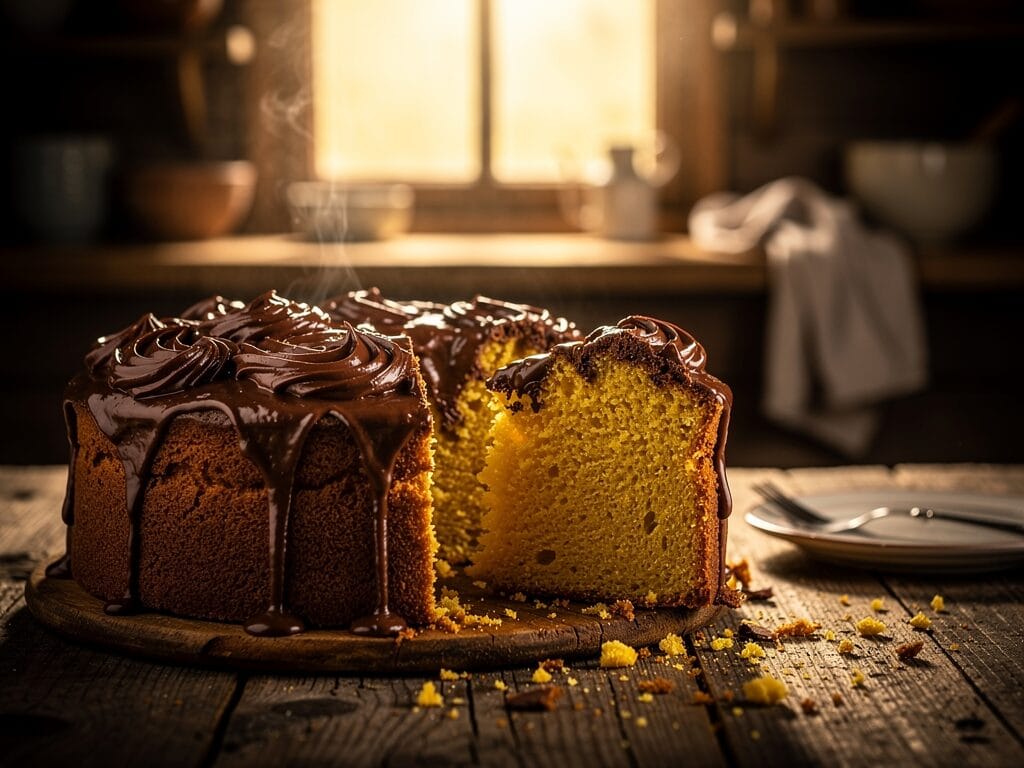
Best Gluten-Free Yellow Cake with Chocolate Frosting
If you’ve ever bitten into a gluten-free yellow cake only to find it crumbly, dry, or oddly gritty, you’re not alone. The truth is, most gluten-free yellow cake recipes fail because they don’t account for hydration balance and proper structure-building, two fundamentals we obsess over here at Glutenoo Test Kitchen.
This isn’t just another gluten-free yellow cake recipe. It’s a Test Kitchen-approved formula born from precision, science, and real-world feedback. Whether you’re baking a layer cake for a celebration or a simple sheet cake for Sunday supper, this recipe delivers consistent, bakery-quality results every single time. Total time? Just 1 hour and 15 minutes from mise en place to frosted masterpiece.
Table of Contents
Why This Gluten-Free Yellow Cake with Chocolate Frosting Works
Let’s get analytical. The hallmark failures of gluten-free baking- dryness, density, and that telltale “sandy” mouthfeel- stem from improper flour blends, inadequate fat distribution, and poor moisture retention. This recipe solves all three.
| Typical GF Yellow Cake | Glutenoo Version |
|---|---|
| Single-flour base (rice or almond) | Multi-flour blend (structure + tenderness) |
| Minimal fat, relies on sugar alone | Butter + oil (flavor + moisture lock) |
| No hydration strategy | Controlled liquid-to-starch ratio |
| Gritty, crumbly texture | Tender, fluffy, no grit |
The Science Behind the Success:
- Gluten-Free Baking Flour Blend: A mix of white rice flour (structure), tapioca starch (chew), and potato starch (tenderness). Xanthan gum mimics gluten’s elasticity.
- Dual-Fat Strategy: Butter provides flavor; neutral oil locks in moisture and extends shelf life.
- Room-Temperature Eggs: Critical for emulsification. Cold eggs break the batter, yielding a dense crumb.
- Buttermilk (or Substitute): Acidity tenderizes starches and activates baking soda for superior lift.
- Chocolate Buttercream Frosting: Dutch-process cocoa (smoother, less acidic) + precision butter ratio = fudge-like consistency without graininess.
🧪 Oliver’s Science Tip
“Did you know? Gluten-free batters require 10-15% more hydration than wheat-based batters because starches absorb liquid differently. This ensures the cake stays moist for days, not hours.”
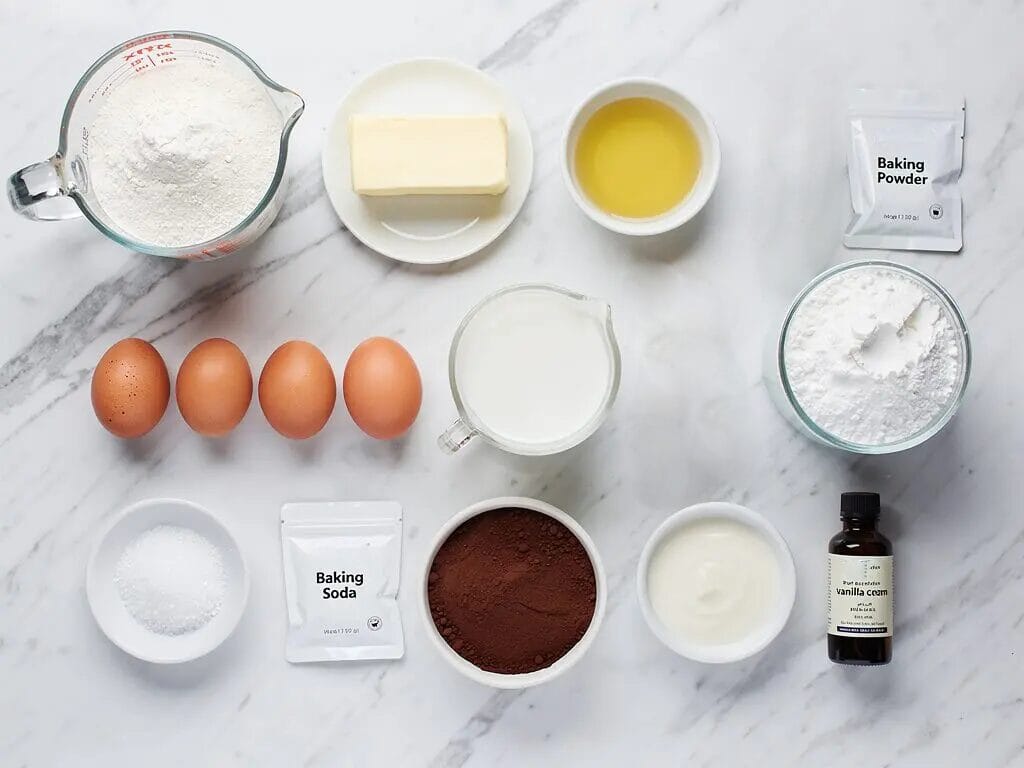
Ingredients
For the Gluten-Free Yellow Cake:
| Quantity | Ingredient | Oliver’s Notes |
|---|---|---|
| 2½ cups (300g) | Gluten-free flour blend (with xanthan gum) | Use King Arthur or Bob’s Red Mill 1:1. Weigh for accuracy. |
| 1¾ cups (350g) | Granulated sugar | Do not substitute with coconut sugar; affects structure. |
| ¾ cup (170g) | Unsalted butter, room temp | Must be pliable, not melted. Use dairy-free butter for DF option. |
| ½ cup (120ml) | Neutral oil (canola, avocado) | Moisture insurance. Do not skip. |
| 4 large | Eggs, room temperature | Cold eggs = broken emulsion. Let sit 30 min. |
| 1 cup (240ml) | Buttermilk, room temperature | Or: 1 cup almond milk + 1 tbsp lemon juice (rest 5 min). |
| 2 tsp | Pure vanilla extract | Imitation vanilla lacks depth. |
| 2 tsp | Baking powder | Ensure it’s fresh (test: fizzes in hot water). |
| ½ tsp | Baking soda | Works with buttermilk’s acidity for lift. |
| ¾ tsp | Fine sea salt | Enhances sweetness, balances flavor. |
For the Chocolate Buttercream Frosting:
| Quantity | Ingredient | Oliver’s Notes |
|---|---|---|
| 1 cup (226g) | Unsalted butter, room temp | Must be soft for silky texture. |
| 3½ cups (420g) | Powdered sugar, sifted | Sifting prevents lumps. |
| ¾ cup (75g) | Dutch-process cocoa powder | Hershey’s Special Dark or Valrhona. Natural cocoa is too acidic. |
| ⅓ cup (80ml) | Heavy cream (or coconut cream) | Adjust for desired consistency. |
| 2 tsp | Pure vanilla extract | Balances chocolate’s bitterness. |
| ¼ tsp | Fine sea salt | Critical for fudge-like depth. |
Essential Tools
- Digital Kitchen Scale: Non-negotiable for gluten-free precision. Flour volume can vary by 20%.
- Stand Mixer or Hand Mixer: Proper aeration requires consistent speed control.
- Two 9-inch Round Cake Pans: For a layer cake. Or one 9×13-inch pan for sheet cake.
- Parchment Paper: Line pans to prevent sticking (GF cakes are delicate).
- Offset Spatula: For smooth, professional frosting application.
How to Make Gluten-Free Yellow Cake with Chocolate Frosting from Scratch
Step 1: Prep and Preheat
- Preheat your oven to 350°F (175°C). Position the rack in the center.
- Grease two 9-inch round pans with butter or non-stick spray. Line the bottoms with parchment rounds. Dust lightly with gluten-free flour blend and tap out excess.
- Let eggs, butter, and buttermilk sit at room temperature for 30 minutes. This is critical for emulsification.
Step 2: Combine Dry Ingredients
- In a large bowl, whisk together the gluten-free baking flour blend, baking powder, baking soda, and salt. Set aside.
Step 3: Cream Butter and Sugar
- In the bowl of a stand mixer fitted with the paddle attachment (or using a hand mixer), beat the room-temperature butter and granulated sugar on medium-high speed for 3-4 minutes, until pale and fluffy. Scrape down the sides halfway through.
- Add the eggs one at a time, beating well after each addition (about 30 seconds). The mixture should look thick and glossy.
- Beat in the vanilla extract and oil until fully incorporated.
Chef’s Note:
The batter may look slightly curdled after adding oil—this is normal. It will smooth out when you add the dry ingredients.
Step 4: Alternate Wet and Dry
- With the mixer on low speed, add the flour mixture in three additions, alternating with the buttermilk in two additions. Begin and end with flour. Mix just until no streaks remain; do not overmix. Overmixing activates xanthan gum excessively, resulting in excessive gumminess.
- The batter should be thick but pourable, like pancake batter. If it’s too stiff, add 1-2 tablespoons of buttermilk.
Step 5: Bake
- Divide the batter evenly between the prepared pans (use a scale for precision: approximately 580g per pan).
- Bake for 28-32 minutes, or until a toothpick inserted in the center comes out with a few moist crumbs (not wet batter). The tops should spring back when gently pressed.
- Cool in pans on a wire rack for 15 minutes, then turn out onto the rack to cool completely (about 1 hour). Do not frost a warm cake; it will melt.
Step 6: Make the Chocolate Buttercream Frosting
- In a stand mixer, beat the room-temperature butter on medium speed for 2 minutes until creamy.
- Sift together the powdered sugar and cocoa powder. Add to the butter in three additions, beating on low speed after each to prevent a sugar cloud.
- Add the heavy cream, vanilla extract, and salt. Increase speed to medium-high and beat for 3-4 minutes, until light and fluffy. If too thick, add cream 1 tablespoon at a time. If too thin, add more powdered sugar (¼ cup increments).
Step 7: Assemble the Layer Cake
- Place one cake layer on a serving plate. Spread about 1 cup of chocolate frosting evenly on top using an offset spatula.
- Place the second layer on top, pressing gently. Apply a thin “crumb coat” of frosting over the entire cake to seal in crumbs. Refrigerate for 15 minutes.
- Apply the final coat of frosting, smoothing with the spatula. Decorate as desired (I recommend a simple swirl pattern for elegance).
Expert Tips for Success
- Weigh Your Flour: Gluten-free flour blends settle and compact. Scooping with a cup can add 30g+ extra flour, yielding a dry cake. Use a scale.
- Check Your Leaveners: Baking powder loses potency after 6 months. Test by adding ½ tsp to hot water—it should bubble vigorously.
- Don’t Skip the Oil: Even if you’re using butter for flavor, the oil provides long-term moisture retention. This cake stays tender for 3 days.
- Oven Thermometer: Most home ovens run 10-25°F off calibration. A $10 thermometer saves countless batches.
Variations & Add-Ins
- Dairy-Free Gluten-Free Yellow Cake with Chocolate Frosting: Substitute butter with vegan butter (Miyoko’s or Earth Balance). Use almond milk + lemon juice for buttermilk. Use coconut cream in frosting.
- Egg-Free Yellow Cake: Replace each egg with a “flax egg” (1 tbsp ground flaxseed + 3 tbsp water, rested 5 min). Texture will be denser but still delicious.
- Easy Gluten-Free Yellow Sheet Cake with Chocolate Buttercream Frosting: Pour batter into a greased 9×13-inch pan. Bake at 350°F for 35-40 minutes. Cool and frost directly in the pan.
- Flavor Twists: Add ½ tsp almond extract to the cake batter, or fold in ½ cup mini chocolate chips before baking.
Serving Suggestions
This gluten-free yellow cake chocolate frosting recipe for a layer cake is a celebration centerpiece. Serve at birthdays, potlucks, or as a stunning finale to Sunday dinner. Pair with fresh raspberries or strawberries to cut the sweetness, or a dollop of whipped cream for added luxury. For a complete gluten-free dessert spread, consider serving alongside our Gluten Free Cupcakes or Gluten Free Cheesecake for variety.
Storing & Freezing
Room Temperature: Store frosted cake under a cake dome or loosely covered with plastic wrap for up to 3 days. The oil in the batter keeps it moist.
Refrigerator: If your kitchen is warm (above 75°F), refrigerate the cake. Bring to room temperature 30 minutes before serving for the best texture.
Freezer: Wrap unfrosted cake layers tightly in plastic wrap, then aluminum foil. Freeze for up to 3 months. Thaw overnight in the fridge, then bring to room temperature and frost. Frosting can also be frozen in an airtight container for 2 months; thaw and re-whip before using.
Estimated Nutrition (Per Slice, 1/12 of Layer Cake)
| Nutrient | Amount |
|---|---|
| Calories | 520 kcal |
| Total Carbohydrates | 68g |
| Protein | 4g |
| Total Fat | 27g |
| Saturated Fat | 15g |
| Fiber | 2g |
| Sugar | 52g |
| Sodium | 210mg |
Nutrition estimates by Glutenoo Test Kitchen based on standard ingredient databases. Actual values may vary based on specific brands and modifications.
Troubleshooting Guide
| Problem | The Science (Why) | The Fix |
|---|---|---|
| Cake is dry and crumbly | Too much flour or overbaking. GF starches dry out quickly. | Weigh flour; check doneness at 28 min. Use oil in recipe. |
| Gummy, gluey texture | Overmixing activates xanthan gum excessively. | Mix just until combined. Use low speed for final stir. |
| Cake sinks in the center | Oven temp too low or underbaked. Structure didn’t set. | Use oven thermometer. Bake until toothpick has moist crumbs. |
| Frosting is grainy | Powdered sugar or cocoa not sifted; butter too cold. | Sift dry ingredients. Ensure butter is 65-68°F. Beat longer. |
| Cake sticks to pan | Insufficient greasing or cooling too long in pan. | Use parchment rounds. Turn out after 15 min, not longer. |
Frequently Asked Questions
Can I make this gluten-free yellow cake with chocolate frosting ahead of time?
Absolutely. Bake the cake layers up to 2 days in advance, wrap tightly in plastic wrap, and store at room temperature. Frost the day of serving for the freshest presentation. You can also make the chocolate buttercream frosting 3 days ahead and refrigerate; bring to room temperature and re-whip before using.
What is the best gluten-free flour blend for yellow cake and chocolate frosting?
I recommend a blend that includes white rice flour, tapioca starch, and potato starch with xanthan gum already added. King Arthur Measure for Measure and Bob’s Red Mill 1-to-1 Baking Flour are Test Kitchen-approved. Avoid single-flour options like almond or coconut flour; they lack the structure needed for layer cakes. For more on gluten-free flour science, visit Beyond Celiac.
How do I make dairy-free options for gluten-free yellow cake with chocolate frosting?
Substitute unsalted butter with a high-quality vegan butter (Miyoko’s is my top choice). Replace buttermilk with 1 cup unsweetened almond milk + 1 tablespoon lemon juice or apple cider vinegar; let sit 5 minutes before using. For the frosting, use vegan butter and coconut cream in place of heavy cream. The texture and flavor remain remarkably similar.
Can I make this as an egg-free yellow cake?
Yes, though the texture will be slightly denser. Use “flax eggs”: for each egg, combine 1 tablespoon ground flaxseed with 3 tablespoons water and let sit for 5 minutes. You can also use commercial egg replacers, such as Bob’s Red Mill Egg Replacer. For a comprehensive guide to egg substitutes in gluten-free baking, check out resources at Celiac.org.
Why is my gluten-free yellow cake gritty or sandy?
Grittiness comes from coarse flour particles or insufficient hydration. Make sure your flour blend contains fine-milled starches and let the batter rest for 5 minutes before baking—this allows the starches to hydrate fully. Also, ensure you’re not over-measuring flour by scooping directly from the bag. Always weigh your ingredients for precision and a no-grit result.
You May Also Like
- Gluten Free Carrot Cake: 4 Foolproof Steps to Bake Like a Pro
- Gluten Free Pound Cake: 5 Essential Ingredients You Need
- 10 Incredible Gluten-Free Dairy-Free Dessert Recipes You’ll Love to Make
Fluffy Gluten Free Yellow Cake with Chocolate Frosting
Equipment
- Digital Kitchen Scale Non-negotiable for gluten-free precision. Flour volume can vary by 20%.
- Stand Mixer or Hand Mixer Proper aeration requires consistent speed control.
- Two 9-inch Round Cake Pans For layer cake. Or one 9×13-inch pan for sheet cake.
- Parchment paper Line pans to prevent sticking (GF cakes are delicate).
- Offset Spatula Forsmooth, professional frosting application.
Ingredients
Main Ingredients
- 2½ cups (300g) Gluten-free flour blend with xanthan gum
- 1¾ cups (350g) Granulated sugar
- ¾ cups (170g) Unsalted butter, room temp
- ½ cups (120ml) Neutral oil
- 4 Large Eggs, room temperature
- 1 cups (240ml) Buttermilk, room temperature
- 2 tsp Pure vanilla extract
- 2 tsp Baking powder
- ½ tsp Baking soda
- ¾ tsp Fine sea salt
- 1 cup (226g) Unsalted butter, room temp for frosting
- 3½ cups (420g) Powdered sugar, sifted
- ¾ cups (75g) Dutch-process cocoa powder
- ⅓ cups (80ml) Heavy cream
- 2 tsp Pure vanilla extract for frosting
- ¼ tsp Fine sea salt for frosting
Instructions
Preparation
- Preheat your oven to 350°F (175°C). Position the rack in the center.
- Grease two 9-inch round pans with butter or non-stick spray. Line the bottoms with parchment rounds. Dust lightly with gluten-free flour blend and tap out excess.
- Let eggs, butter, and buttermilk sit at room temperature for 30 minutes. This is critical for emulsification.
Combine Dry Ingredients
- In a large bowl, whisk together the gluten-free baking flour blend, baking powder, baking soda, and salt. Set aside.
Cream Butter and Sugar
- In the bowl of a stand mixer fitted with the paddle attachment (or using a hand mixer), beat the room-temperature butter and granulated sugar on medium-high speed for 3-4 minutes, until pale and fluffy. Scrape down the sides halfway through.
- Add the eggs one at a time, beating well after each addition (about 30 seconds). The mixture should look thick and glossy.
- Beat in the vanilla extract and oil until fully incorporated.
Alternate Wet and Dry
- With the mixer on low speed, add the flour mixture in three additions, alternating with the buttermilk in two additions. Begin and end with flour. Mix just until no streaks remain—do not overmix. Overmixing activates xanthan gum excessively, leading to gumminess.
- The batter should be thick but pourable, like pancake batter. If it's too stiff, add 1-2 tablespoons of buttermilk.
Bake
- Divide the batter evenly between the prepared pans (use a scale for precision: approximately 580g per pan).
- Bake for 28-32 minutes, or until a toothpick inserted in the center comes out with a few moist crumbs (not wet batter). The tops should spring back when gently pressed.
- Cool in pans on a wire rack for 15 minutes, then turn out onto the rack to cool completely (about 1 hour). Do not frost a warm cake—it will melt.
Make Chocolate Buttercream Frosting
- In a stand mixer, beat the room-temperature butter on medium speed for 2 minutes until creamy.
- Sift together the powdered sugar and cocoa powder. Add to the butter in three additions, beating on low speed after each to prevent a sugar cloud.
- Add the heavy cream, vanilla extract, and salt. Increase speed to medium-high and beat for 3-4 minutes, until light and fluffy. If too thick, add cream 1 tablespoon at a time. If too thin, add more powdered sugar (¼ cup increments).
Assemble Layer Cake
- Place one cake layer on a serving plate. Spread about 1 cup of chocolate frosting evenly on top using an offset spatula.
- Place the second layer on top, pressing gently. Apply a thin "crumb coat" of frosting over the entire cake to seal in crumbs. Refrigerate for 15 minutes.
- Apply the final coat of frosting, smoothing with the spatula. Decorate as desired (I recommend a simple swirl pattern for elegance).