Homemade Gluten-Free Hamburger Buns (Soft)
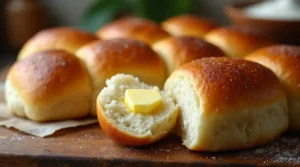
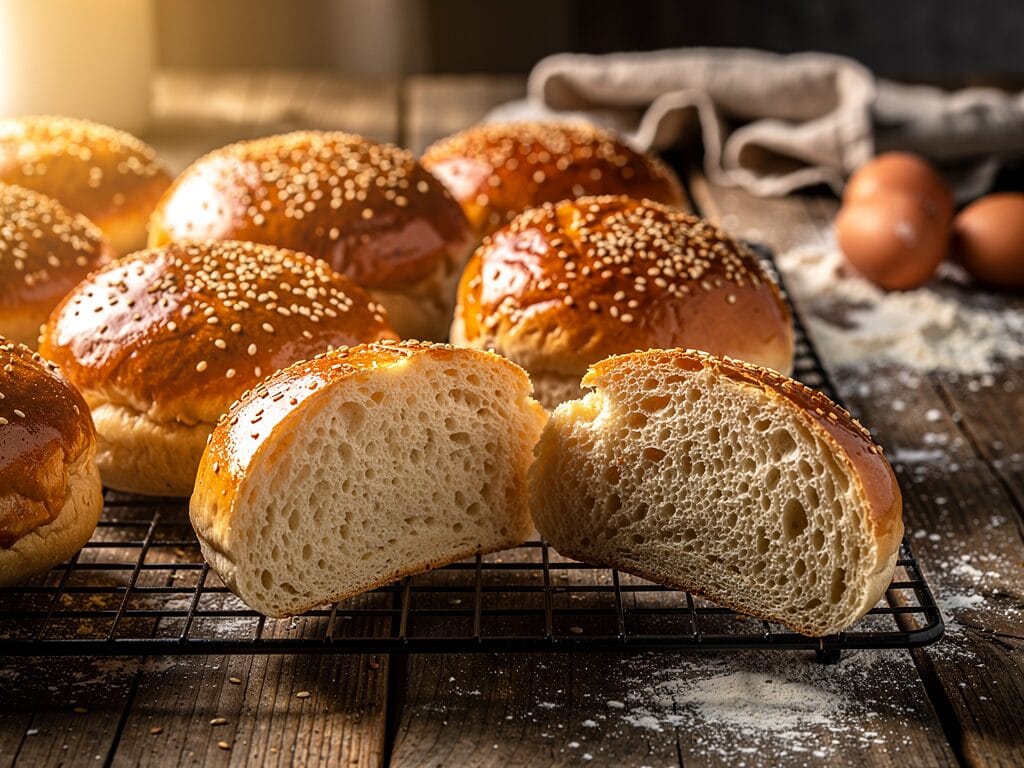
Tired of gluten-free hamburger buns that crumble at the first bite, taste like cardboard, or simply can’t hold up to a juicy patty and all your favorite toppings? The quest for a truly soft, pliable, and utterly delicious homemade gluten-free hamburger bun recipe ends right here. As a culinary scientist and your guide at Glutenoo, I’m thrilled to share a master recipe that consistently delivers the light, airy texture and satisfying chew you’ve been dreaming of. Get ready to transform your burger nights with these incredible buns prepared in under 2 hours, including proofing and baking!
Table of Contents
Why This Recipe Works
Crafting exceptional gluten-free bread isn’t just about mixing ingredients; it’s a science. Many store-bought options disappoint because they lack the specific structural components that gluten provides. This homemade gluten-free hamburger bun recipe, however, leverages a blend of expert techniques and carefully selected ingredients to overcome these challenges, resulting in a superior product.
| Feature | Typical Store-Bought GF Buns | This Recipe |
|---|---|---|
| Texture | Often dry, dense, and crumbly | Remarkably soft, fluffy, and tender |
| Taste | Bland, starchy, or with an off-flavor | Rich, subtly sweet, and wonderfully satisfying |
| Structure | Falls apart, struggles to hold fillings | Sturdy yet pliable, perfect for any burger |
Here’s the culinary science behind their success:
- Psyllium Husk Powder: This isn’t just a thickener; it’s the gluten mimicker. When hydrated, psyllium husk forms a gel-like substance that provides elasticity and structure, preventing the crumbly texture common in gluten-free breads. It gives these buns their incredible chew and ability to stretch.
- Optimal Hydration: Gluten-free flours require more liquid than traditional wheat flours. Our precise hydration levels ensure the dough remains moist and pliable, yielding a light and airy crumb.
- Double-Action Yeast Activation: By activating the yeast with sugar and warm water, we give it a head start, ensuring a robust rise. A second proofing stage allows the dough to fully develop its structure and flavor before baking.
- Balanced Flour Blend: Instead of a single, heavy gluten-free flour, this recipe utilizes a blend that balances starchiness with protein, contributing to both tenderness and structural integrity.
Ingredients & Quantities
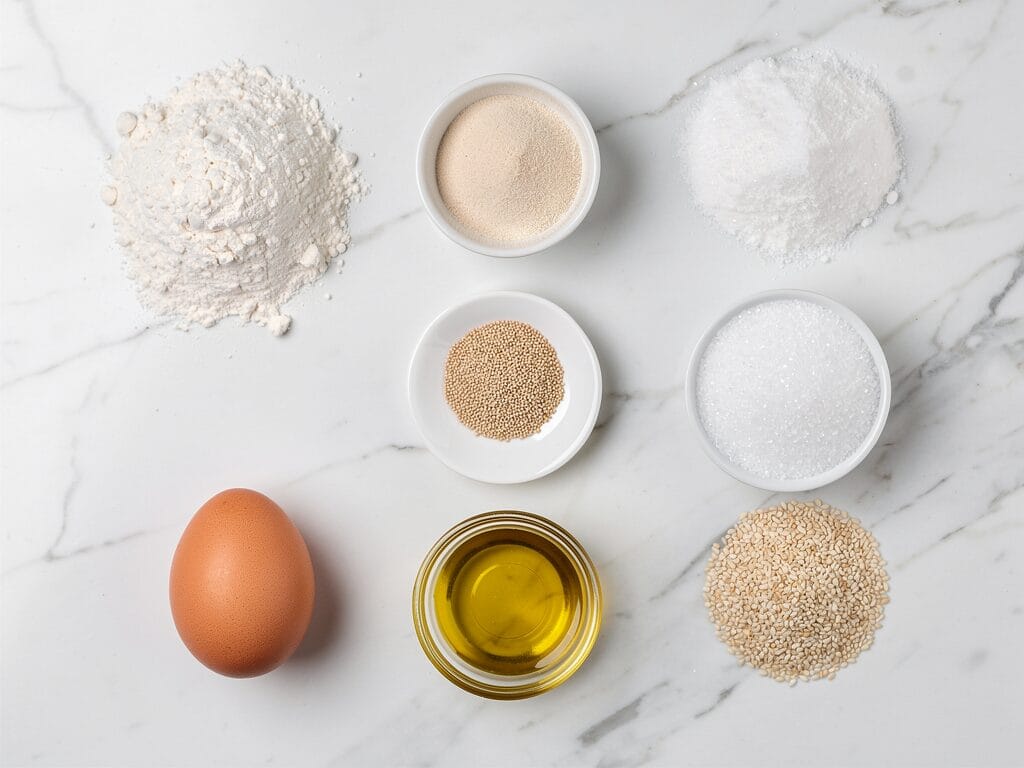
Precision is paramount in gluten-free baking. Weighing your ingredients will yield the most consistent and best results.
| Quantity | Ingredient | Notes/Substitutions |
|---|---|---|
| 1 ¼ cups (300ml) | Warm Water | (105-115°F or 40-46°C) – critical for yeast activation. |
| 2 ¼ tsp (7g) | Active Dry Yeast | One standard packet. Ensure it’s fresh! |
| 1 tbsp (15g) | Granulated Sugar | Feeds the yeast and adds a hint of sweetness. |
| 2 cups (280g) | Gluten-Free All-Purpose Flour Blend | Look for a blend with xanthan gum. (Bob’s Red Mill 1-to-1 or King Arthur Measure for Measure work well). |
| ¼ cup (30g) | Tapioca Starch | Adds chewiness and elasticity. No direct substitute. |
| ¼ cup (20g) | Psyllium Husk Powder | Crucial for texture. Do NOT skip or substitute. |
| 1 ½ tsp (9g) | Fine Sea Salt | Balances flavor; don’t use coarse salt. |
| 2 tbsp (28g) | Olive Oil (or melted unsalted butter) | Adds richness and tenderness. For dairy-free, stick with oil. |
| 1 Large | Egg | Adds structure, richness, and aids in browning. For egg-free, use a flax egg (1 tbsp ground flaxseed + 3 tbsp water, let sit 5 mins). |
| 1 tsp | Apple Cider Vinegar | Acts as a leavening booster and helps create a tender crumb. |
| Optional | Egg wash (1 egg + 1 tbsp water) and sesame seeds | For golden tops and classic burger bun aesthetic. |
Kitchen Equipment & Tools
- Digital Kitchen Scale: Absolutely non-negotiable for gluten-free baking. Cup measurements can vary drastically by as much as 20%, which is enough to ruin the delicate balance of gluten-free dough.
- Stand Mixer with Paddle Attachment: Gluten-free dough is often very sticky and wet, making it nearly impossible to knead effectively by hand. A stand mixer provides the necessary power and consistency to develop the dough properly.
- Large Mixing Bowl: Essential for the initial yeast activation and combining dry ingredients.
- Baking Sheet with Parchment Paper: Prevents sticking and promotes even baking. Parchment paper also makes cleanup a breeze.
- Pastry Scraper or Spatula: Helpful for handling the sticky dough and shaping the buns without adding too much extra flour.
- Instant-Read Thermometer: Critical for ensuring your water is at the optimal temperature for yeast activation and checking the internal temperature of the baked buns for doneness.
How to make a homemade gluten-free hamburger bun recipe
Phase 1: Activate the Yeast
- In the bowl of your stand mixer, combine the warm water (105-115°F), granulated sugar, and active dry yeast. Gently stir to combine.
- Let this mixture sit for 5-10 minutes, until it becomes foamy and bubbly. This indicates your yeast is alive and active. If it doesn’t foam, your yeast is likely expired, or your water was too hot/cold; start over.
Phase 2: Prepare the Dry Ingredients
- In a separate large bowl, whisk together the gluten-free all-purpose flour blend, tapioca starch, psyllium husk powder, and fine sea salt until thoroughly combined. This ensures even distribution of all ingredients.
Phase 3: Mix the Dough
- Add the olive oil (or melted butter), egg, and apple cider vinegar to the activated yeast mixture in the stand mixer bowl. Mix on low speed using the paddle attachment until just combined.
- Gradually add the dry ingredient mixture to the wet ingredients in the stand mixer bowl, mixing on low speed. Once all dry ingredients are added, increase the speed to medium-high and beat for 5-7 minutes.
Phase 4: Shape the Buns
- Lightly grease your hands or a pastry scraper. Line a baking sheet with parchment paper.
- Using an ice cream scoop (about ¼ cup capacity) or your greased hands, divide the dough into 6 equal portions.
- Gently shape each portion into a round bun on the prepared baking sheet. It helps to gently press the dough against the parchment paper to create a smooth surface. Aim for buns about 3-3.5 inches in diameter and leave at least 2 inches between them.
Phase 5: Proofing and Baking
- Loosely cover the shaped buns with a clean kitchen towel or plastic wrap (lightly oiled to prevent sticking).
- Let the buns proof in a warm, draft-free place for 30-45 minutes, or until they have noticeably increased in size by about 50%. This can be a turned-off oven with the light on, or near a warm window.
- While the buns are proofing, preheat your oven to 375°F (190°C).
- If desired, whisk one egg with 1 tablespoon of water for an egg wash. Gently brush the tops of the proofed buns with the egg wash and sprinkle with sesame seeds.
- Bake for 20-25 minutes, or until the buns are golden brown and sound hollow when tapped on the bottom. An instant-read thermometer inserted into the center of a bun should read 205-210°F (96-99°C) for optimal doneness.
- Remove the buns from the oven and immediately transfer them to a wire rack to cool completely before slicing and serving. Cooling completely is crucial for gluten-free bread to set its structure.
Expert Tips for Success
- Weigh Everything: As emphasized, using a digital kitchen scale for your gluten-free flours, starches, and psyllium husk powder is the single most important step for consistent results when making this homemade gluten-free hamburger bun recipe. Volume measurements are simply not accurate enough.
- Yeast Temperature: Ensure your water is between 105-115°F (40-46°C). Too cold, and the yeast won’t activate; too hot, and you’ll kill it. Use an instant-read thermometer.
- Don’t Over-Handle the Dough: While shaping, be gentle. The less you manipulate the dough, the lighter and airier your final buns will be.
- Internal Temperature Check: For a perfect bake, always check the internal temperature of your buns. This ensures they are fully cooked through and not gummy in the center, which can happen with gluten-free breads.
- Cool completely: Resist the urge to slice into warm buns! Gluten-free bread continues to set as it cools. Slicing too early can result in a gummy texture.
- Psyllium Husk Powder Quality: Not all psyllium husk powders are created equal. Use a fine, pure psyllium husk powder for the best texture.
Variations & Add-ins
- Dairy-Free Buns: Easily make these buns dairy-free by using olive oil instead of melted butter, and if using an egg wash, ensure all other ingredients are dairy-free (most are).
- Sesame & Poppy Seed: For a classic “everything bagel” bun feel, sprinkle a mix of sesame seeds, poppy seeds, dried minced garlic, and dried minced onion on top before baking.
- Garlic Butter Topper: After baking, immediately brush the warm buns with melted garlic butter for an extra layer of savory flavor.
- Herb Buns: Fold 1-2 tablespoons of finely chopped fresh herbs like rosemary or chives into the dough during the last minute of mixing for aromatic variations.
Serving Suggestions
These fluffy GF buns are the perfect canvas for so many delicious meals! Naturally, they’re ideal for your favorite hamburgers, from classic beef patties to juicy turkey burgers or even vibrant veggie burgers. But don’t stop there! They make fantastic homemade sandwich rolls for pulled pork, grilled chicken sandwiches, or even a hearty Reuben. Imagine slathering them with avocado, layering on some fresh veggies, and your preferred protein for an epic packed lunch. The possibilities are truly endless with this versatile homemade gluten-free hamburger bun recipe.
Storing, Freezing, and Reheating
Once completely cooled, store your homemade gluten-free hamburger buns in an airtight container at room temperature for 2-3 days. For longer storage, slice the buns in half, then place them in a freezer-safe bag or container and freeze for up to 3 months. When ready to use, thaw at room temperature, then refresh them by toasting lightly, warming in a microwave for 15-20 seconds, or in a 350°F (175°C) oven for 5-7 minutes until soft and warm.
Estimated Nutrition
| Nutrient | Amount per serving (1 bun) |
|---|---|
| Calories | 240 kcal |
| Carbohydrates | 34g |
| Protein | 5g |
| Fat | 10g |
| Fiber | 2g |
| Sugar | 3g |
Nutritional values are estimates based on standard ingredients.
Troubleshooting Guide: Common Problems & How to Fix Them
Even with the best homemade gluten-free hamburger buns recipe, baking can sometimes throw curveballs. Here’s how to tackle common issues:
| Problem | Possible Cause | The Fix |
|---|---|---|
| Buns are dense or heavy | Yeast wasn’t active, too much flour/not enough water, under-proofing. | Ensure yeast foams before use. Weigh ingredients precisely. Allow full proofing time in a warm spot. |
| Gummy texture inside | Underbaked or sliced before fully cooled. | Bake until internal temperature reaches 205-210°F. Always cool completely on a wire rack. |
| Buns spread too much/flat | Over-proofing, too much liquid, or not enough psyllium husk. | Monitor proofing; buns should double, not triple. Recheck ingredient measurements, especially psyllium and water. |
| Crumbly or dry | Not enough liquid, too much flour, or missing psyllium husk. | Weigh precisely. The dough should be sticky; don’t add extra flour. Psyllium is essential for elasticity. |
FAQ
Can I substitute the psyllium husk powder in this homemade gluten-free hamburger bun recipe?
Absolutely not. Psyllium husk powder is non-negotiable for the texture and structure of these buns. It acts as the primary binder and provides the necessary elasticity that gluten typically offers. Skipping it will result in a dense, crumbly bun that lacks the desired chewiness.
What if my gluten-free flour blend doesn’t contain xanthan gum?
If your chosen gluten-free all-purpose flour blend does not already contain xanthan gum, you’ll need to add ½ teaspoon to the dry ingredients. Xanthan gum works in conjunction with psyllium husk to improve the elasticity and texture of gluten-free baked goods.
Can I make these buns ahead of time?
Yes! Once baked and fully cooled, store them in an airtight container at room temperature for up to 2-3 days, or freeze them for up to 3 months. Thaw and reheat as directed in the “Storing, Freezing, and Reheating” section for best results.
Why is cooling completely so important for gluten-free bread?
Gluten-free breads continue to “cook” and set their internal structure as they cool. Slicing into them while warm can disrupt this process, leading to a gummy or doughy texture that won’t hold up well. Patience is a virtue here!
Can I use this recipe for hot dog buns?
Yes, you can! Simply shape the dough into elongated rolls (about 5-6 inches long) instead of round buns. Adjust baking time slightly if needed, but the internal temperature will remain the same for doneness.
For more information on living gluten-free, visit the Celiac Disease Foundation or the Mayo Clinic resources.
You May Also Like
- Easy Gluten-Free Dinner Rolls – Fluffy
- Gluten Free Artisan Bread Recipe: 6 Ways to Master Baking Bliss
- Gluten-free Hawaiian Rolls 10 easy steps to perfection
Homemade Gluten-Free Hamburger Buns
Equipment
- Digital Kitchen Scale
- Stand Mixer with Paddle Attachment
- Large mixing bowl
- Baking Sheet with Parchment Paper
- Pastry Scraper or Spatula
- Instant Read Thermometer
Ingredients
Main Ingredients
- 1 ¼ cups (300ml) Warm Water (105-115°F or 40-46°C) – critical for yeast activation.
- 2 ¼ tsp (7g) Active Dry Yeast One standard packet. Ensure it’s fresh!
- 1 tbsp (15g) Granulated Sugar Feeds the yeast and adds a hint of sweetness.
- 2 cups (280g) Gluten-Free All-Purpose Flour Blend Look for a blend with xanthan gum. (Bob’s Red Mill 1-to-1 or King Arthur Measure for Measure work well).
- ¼ cup (30g) Tapioca Starch Adds chewiness and elasticity. No direct substitute.
- ¼ cup (20g) Psyllium Husk Powder Crucial for texture. Do NOT skip or substitute.
- 1 ½ tsp (9g) Fine Sea Salt Balances flavor; don’t use coarse salt.
- 2 tbsp (28g) Olive Oil (or melted unsalted butter) Adds richness and tenderness. For dairy-free, stick with oil.
- 1 Large Egg Adds structure, richness, and aids in browning. For egg-free, use a flax egg (1 tbsp ground flaxseed + 3 tbsp water, let sit 5 mins).
- 1 tsp Apple Cider Vinegar Acts as a leavening booster and helps create a tender crumb.
- 1 Large Egg Optional, for egg wash (with 1 tbsp water).
- Optional Sesame Seeds For golden tops and classic burger bun aesthetic.
Instructions
Main Instructions
Phase 1: Activate the Yeast1.
- In the bowl of your stand mixer, combine the warm water (105-115°F), granulated sugar, and active dry yeast. Gently stir to combine. Let this mixture sit for 5-10 minutes, until it becomes foamy and bubbly. This indicates your yeast is alive and active. If it doesn't foam, your yeast is likely expired, or your water was too hot/cold; start over.
Phase 2: Prepare the Dry Ingredients.
- In a separate large bowl, whisk together the gluten-free all-purpose flour blend, tapioca starch, psyllium husk powder, and fine sea salt until thoroughly combined. This ensures even distribution of all ingredients.
Phase 3: Mix the Dough.
- Add the olive oil (or melted butter), egg, and apple cider vinegar to the activated yeast mixture in the stand mixer bowl. Mix on low speed using the paddle attachment until just combined.Gradually add the dry ingredient mixture to the wet ingredients in the stand mixer bowl, mixing on low speed. Once all dry ingredients are added, increase the speed to medium-high and beat for 5-7 minutes. Chef's Note: The dough will be very wet and sticky, more like a thick batter than traditional bread dough. Do NOT be tempted to add more flour! This high hydration is essential for soft, pliable gluten-free buns. Trust the process.
Phase 4: Shape the Buns
- Lightly grease your hands or a pastry scraper. Line a baking sheet with parchment paper. Using an ice cream scoop (about ¼ cup capacity) or your greased hands, divide the dough into 6 equal portions.Gently shape each portion into a round bun on the prepared baking sheet. It helps to gently press the dough against the parchment paper to create a smooth surface. Aim for buns about 3-3.5 inches in diameter and leave at least 2 inches between them.
Phase 5: Proofing and Baking.
- Loosely cover the shaped buns with a clean kitchen towel or plastic wrap (lightly oiled to prevent sticking).10. Let the buns proof in a warm, draft-free place for 30-45 minutes, or until they have noticeably increased in size by about 50%. This can be a turned-off oven with the light on, or near a warm window. While the buns are proofing, preheat your oven to 375°F (190°C).12. If desired, whisk one egg with 1 tablespoon of water for an egg wash. Gently brush the tops of the proofed buns with the egg wash and sprinkle with sesame seeds. Bake for 20-25 minutes, or until the buns are golden brown and sound hollow when tapped on the bottom. An instant-read thermometer inserted into the center of a bun should read 205-210°F (96-99°C) for optimal doneness. Remove the buns from the oven and immediately transfer them to a wire rack to cool completely before slicing and serving. Cooling completely is crucial for gluten-free bread to set its structure.