
The Best Soft Gluten-Free White Sandwich Bread (Dairy-Free Option)

Have you given up on finding Gluten-Free White Sandwich Bread that actually tastes like… bread? We analyzed thousands of reviews and tested dozens of ratios to solve the three biggest problems with homemade gluten-free bread: it’s often too crumbly, too dry, or dense as a brick.
This isn’t just another recipe. This is a data-driven formula for the perfect white sandwich bread. It is soft enough to bend without breaking, toasts perfectly, and tastes just like the classic bakery loaf you remember.
Whether you are making a PB&J for school lunches or a classic grilled cheese, this loaf is the foundation your kitchen needs.

As an Amazon Associate and affiliate partner, I earn from qualifying purchases at no extra cost to you.
Table of Contents
🧪 The Science: Why the Gluten-Free White Sandwich Bread Recipe Works
Don’t swap ingredients blindly! Gluten-free baking is chemistry. Here is the role of each player in our formula:
- The Flour Blend (Rice & Starch Ratio): Not all gluten-free blends are created equal. To replicate our results exactly, we developed this recipe using King Arthur Measure for Measure Flour. Its precise balance of rice flour (structure) and starches (lightness) prevents the “gritty” texture often found in other brands. Note: This blend already contains Xanthan Gum, which is the essential binder for structure.
- Apple Cider Vinegar (The Booster): Yeast needs a slightly acidic environment to thrive. The vinegar boosts the rise by up to 20% compared to water alone, creating airy bubbles.
- Egg Whites (The Structure): Without gluten strands to hold the air bubbles, the protein in egg whites sets rigidly when baked, preventing the dreaded “post-oven collapse.”
- High Hydration: Gluten-free flour is thirsty! This batter will look wetter than traditional dough; that is the secret to a moist crumb that stays soft for days.
Equipment You Need
- Stand Mixer (Heavy Duty): Gluten-free dough is thick and sticky—it notoriously burns out the motors of standard hand mixers. To get the fluffy texture in the photos, you need mechanical power. I rely on the KitchenAid Artisan Series Stand Mixer with the paddle attachment to beat enough air into the batter without overheating the machine. It’s an investment that lasts a lifetime.
- USA Pan Loaf Pan (Crucial): Glass and silicone pans conduct heat too slowly, causing GF bread to spread rather than rise. I strictly use the USA Pan Nonstick Standard Bread Loaf Pan, 1 Pound, Aluminized Steel because its aluminized steel construction creates the thermal shock needed for a tall, bakery-style lift.
- Instant Read Thermometer (Mandatory): The difference between a perfect rise and a flat brick is temperature. If your water is over 120°F, you kill the yeast instantly. The “wrist test” isn’t accurate enough. I recommend the ThermoPro Digital Thermometer to guarantee your water is exactly 110°F every time. It’s cheap insurance for your baking.
📋 Ingredients List
| Ingredient | Quantity (Scale Recommended) | Notes |
|---|---|---|
| King Arthur Measure for Measure Flour | 420g (approx. 3 Cups) | Do not scoop! Weighing is critical. |
| Warm Water | 300g (300ml / 1 ¼ Cups) | Temp: 105°F – 110°F |
| Granulated Sugar | 50g (¼ Cup) | Feeds the yeast. |
| Instant Yeast | 7g (2 ¼ tsp) | 1 standard packet. |
| Olive Oil | 54g (60ml / ¼ Cup) | Or melted butter. |
| Egg Whites | 90g (3 Large Whites) | Room temp. (Great for carton whites). |
| Apple Cider Vinegar | 5g (1 tsp) | The rise booster. |
| Table Salt | 9g (1 ½ tsp) | Do not reduce. |
👩🍳 Step-by-Step Instructions
Step 1: Activate the Yeast (Recommended)
Even with instant yeast, mixing your warm water and sugar first ensures everything is active.
Let it sit for 2 minutes. Critical: Use your Digital Thermometer here. Aim for 105°F – 110°F. If the water is too cool, the yeast sleeps; too hot, it dies.
Pro Tip: If it doesn’t foam slightly after 5 minutes, your yeast might be dead. Buy new yeast before wasting your expensive flour!
Step 2: Mix the Batter (Paddle Attachment Required)
Secure the Paddle Attachment on your stand mixer (do not use the dough hook!). In the bowl, briefly mix the flour and salt. Then, pour in the activated yeast mixture, olive oil, room-temperature egg whites, and vinegar.
- Chef’s Note: Start on Low speed to moisten the flour. Once combined, increase to Medium-High (Speed 6 or 8) for exactly 3 minutes.
- The Science: Since we aren’t kneading gluten, this high-speed beating is physically forcing air bubbles into the batter to create structure.
- Visual Check: The result should look like thick, sticky buttercream frosting. It will NOT look like a firm dough ball.
Step 3: The Rise (Proofing)
Grease your USA Pan Loaf Pan generously. Scrape the batter into the pan. Wet a silicone spatula with warm water and smooth the top (this is essential for a nice crust). Cover with a warm, damp towel or lightly oiled plastic wrap. Let it rise in a warm spot for 40 to 60 minutes.
- Stop Point: Do not let it rise over the rim of the pan, or it might overflow in the oven. Stop when it just reaches the top edge.
Step 4: Bake to Perfection
Preheat your oven to 350°F (175°C) while the bread is rising. Bake for 40 to 45 minutes. The top should be golden brown.
- The “Thump” Test: Tap the top of the bread; it should sound hollow. The internal temperature should be around 205°F – 210°F.
Step 5: The Hardest Part (Cooling) Do not slice it yet!
Remove the bread from the pan immediately and let it cool completely on a wire rack (at least 2 hours). Gluten-free bread finishes “setting” while it cools. Cutting it hot will make the texture gummy and rubbery.
💡 5 Expert Tips for Success (Don’t Skip This!)
- Room Temperature Ingredients are Non-Negotiable:
If you add cold egg whites to warm yeast water, you will shock the yeast and stop the rising process. Ensure your eggs are at room temperature. - Ditch the Cups, Use a Scale:
“Spoon and leveling” is inconsistent. Gluten-free baking is a science, not an art. To get the airy texture in the photos, weigh your flour (420g) using a Digital Kitchen Scale. It’s the cheapest insurance policy for your baking. - Don’t Fear the Sticky Batter:
If you are used to wheat dough, you will panic. This batter looks like thick glue. Do not add more flour. If you add flour until it “looks like dough,” you are making a brick. - Create a Humid Proofing Environment:
A dry kitchen causes a crust to form before the bread finishes rising, stopping its growth. Place a bowl of steaming hot water in the microwave (don’t turn it on) alongside your bread pan to create a mini sauna. - Let it Cool Completely:
We repeat this because it’s the #1 mistake. Cutting hot gluten-free bread releases the steam that keeps the crumb moist.
🍽️ Serving Suggestions & Pairings
Turn this loaf into a meal with these ideas:
- The Ultimate Breakfast: Toast a slice and top with smashed avocado, red pepper flakes, and a poached egg.
Breakfast Idea: If you love a hearty start, try serving toast alongside our Oat Flour Waffles for a brunch spread. - Lunchbox Favorite: This bread holds up perfectly for a classic Turkey Club sandwich. It won’t fall apart in your child’s lunchbox.
- Comfort Dinner: Nothing beats a warm bowl of soup. Serve a toasted slice alongside our Gluten-Free French Onion Soup or use it to dip into our Hearty Venison Chili for a complete meal.
- Leftover Magic: Bread starting to get a bit dry after 3 days? It makes the absolute best Gluten-Free French Toast, or can be cubed for Homemade Croutons.
🔄 Variations and Substitutions
- Make it Vegan: Swap the 3 egg whites for 9 tablespoons of Aquafaba (chickpea liquid) whipped until foamy.
- Make it High Fiber: Add 2 tablespoons of ground flaxseed meal or chia seeds to the dry mix.
- Herbed Loaf: Add 1 tablespoon of dried rosemary and 1 teaspoon of garlic powder to the flour for a savory Italian-style bread.
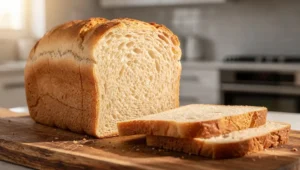
The Best Soft Gluten-Free White Sandwich Bread (Dairy-Free Option)
Equipment
- Stand Mixer (Heavy Duty): To get the fluffy texture in the photos, you need mechanical power. I rely on the KitchenAid Artisan Series Stand Mixer.
- USA Pan Loaf Pan (Crucial): I strictly use the USA Pan Nonstick Standard Bread Loaf Pan, 1 Pound, Aluminized Steel because its aluminized steel construction creates the thermal shock needed for a tall, bakery-style lift.
- Instant Read Thermometer (Mandatory): I recommend the ThermoPro Digital Thermometer to guarantee your water is exactly 110°F every time. It’s cheap insurance for your baking.
Ingredients
- 3 Cups (420g) King Arthur Measure for Measure Flour Do not scoop! Weighing is critical.
- 1/4 Cup (50g) Granulated Sugar Feeds the yeast.
- 2 1/4 tsp (7g) Instant Yeast 1 standard packet.
- 1 1/2 tsp (9g) Table Salt Do not reduce.
- 1 1/4 Cups 300ml (300g) Warm Water Temp: 105°F – 110°F
- 1/4 Cup 60ml (54g) Olive Oil Or melted butter.
- 3 Large (90g) Egg Whites Room temperature
- 1 tsp (5g) Apple Cider Vinegar The rise booster.
Instructions
- 1- Activate the Yeast:
- Even with instant yeast, mixing your warm water and sugar first ensures everything is active.Let it sit for 2 minutes. Critical: Use your Digital Thermometer here. Aim for 105°F – 110°F. If the water is too cool, the yeast sleeps; too hot, it dies.
- 2- Mix the Batter:
- Secure the Paddle Attachment on your stand mixer (do not use the dough hook!). In the bowl, briefly mix the flour and salt. Then, pour in the activated yeast mixture, olive oil, room-temperature egg whites, and vinegar.
- 3- The Rise:
- Grease your USA Pan Loaf Pan generously. Scrape the batter into the pan. Wet a silicone spatula with warm water and smooth the top (this is essential for a nice crust). Cover with a warm, damp towel or lightly oiled plastic wrap. Let it rise in a warm spot for 40 to 60 minutes.
- 4- Bake:
- Preheat oven to 350°F (175°C). Bake for 40-45 minutes until golden brown and hollow-sounding when tapped.
- 5- Cool:
- Remove from the pan immediately and cool completely on a wire rack for at least 2 hours before slicing.
📐 Portion Calculator
Adjust the recipe according to the number of loaves you want to bake.
📏 Portion Adjuster (White Bread)
(Base recipe makes 1 Loaf)
Ingredients (Metric):
🔍 Result: Adjusted Recipe
- Click “Calculate” to see results here…
📊 Nutritional Breakdown
Values are estimated per slice (based on 12 slices per loaf).
| Nutrient | Amount per Slice |
|---|---|
| Calories | 160 kcal |
| Carbohydrates | 28g |
| Protein | 3g |
| Fat | 4g |
| Fiber | 2g |
| Sugar | 3g |
FAQ
Q: Can I freeze this bread?
A: Absolutely. Slice the entire loaf once it has cooled, wrap it tightly in plastic wrap, and then cover it with foil. Freeze for up to 3 months. Toast directly from frozen.
Q: Can I use almond flour?
A: No. Almond flour has a completely different structure and fat content. This recipe relies on a rice/starch-based blend to mimic wheat.
Q: Why did my bread sink in the middle?
A: This is usually due to over-proofing (letting it rise too long) or too much liquid. Ensure you stop rising when the dough just reaches the top of the pan.




Can I make this in a bread machine? I got one for Christmas and hoped to use it for GF breads
Hi Donna! Congrats on the new bread machine—that’s a fantastic gift! 🎁
To answer your question: Proceed with caution. 🧪
We developed this specific formula to be baked in an oven to control the delicate structure of the egg whites and yeast. Standard bread machine cycles are designed for wheat dough; they typically have a “punch down” and a second rise. If you use a standard cycle, the machine will knock the air out of this batter after it rises, causing the loaf to collapse into a dense brick.
If you want to use your machine, strictly follow these rules:
Check for a “Gluten-Free” setting: Your machine must have a specific GF mode that does one mix, one rise, and then bakes immediately.
Watch the hydration: As mentioned in the post, this batter is stickier than wheat dough. You might need to help the machine mix by scraping down the sides with a spatula during the first few minutes.
However, for your very first loaf, I highly recommend trying the oven method above! It gives you the best control over that “soft sandwich” texture.
Let us know how it goes! Oliver
If I only have active yeast (not rapid) will the rise time just be longer? Or is instant yeast needed for this recipe?
Hi Christine!
Oliver here from the Glutenoo Test Kitchen. That is a fantastic question.
You can absolutely use active dry yeast instead of instant for this loaf! Since our recipe already includes a “yeast activation” step (Step 1) with warm water and sugar, your active dry yeast will work perfectly.
You don’t need to change the measurements (keep it at 7g / 2 ¼ tsp), but you will need to make two small adjustments to your timeline:
1- Longer Activation (Step 1): Active dry yeast granules are larger and need more time to wake up. Let it sit in the warm sugar water for about 10 to 15 minutes (instead of 2 minutes) until it gets nice and foamy.
2- Longer Rise Time (Step 3): You are spot on—the rise time in the pan will likely take a bit longer. Instead of 40-60 minutes, it might take 60 to 75 minutes.
My advice: Don’t watch the clock, watch the dough! Just let it rise until the batter reaches the very top rim of your loaf pan, and you’ll be ready to bake.
Happy baking, and let me know how it turns out!
Oliver Bennett Chef @ Glutenoo
the taste is great, although I think I overproofed it a bit it had a little bit of a sink in the center ): also, the outside edge of my bread is super crispy… is that normal? how do we keep the bread soft all throughout?