Soft Gluten-Free Flour Tortillas (That Actually Fold & Don’t Crack!)

Most gluten-free tortillas crack when you fold them, turn brittle within hours, or taste like cardboard. After testing different flour blends and hydration ratios in the Glutenoo Test Kitchen, I’ve cracked the code for gluten-free flour tortillas that stay soft, pliable, and actually taste like the real thing.
This recipe takes just 35 minutes from start to finish, requiring only 5 core ingredients you probably already have in your pantry. No xanthan gum. No complicated techniques. Just science-backed ratios that work every single time.
Table of Contents
Why This Recipe Works
| Typical GF Tortillas | Glutenoo Version |
|---|---|
| Rice flour only (gritty, dry) | Tapioca + rice blend (smooth, elastic) |
| Cracks when folded | Bends without breaking (tested 180° folds) |
| Stiff within 2 hours | Stays pliable for 3+ days |
| Requires xanthan gum | Psyllium husk provides natural binding |
The Science Behind Soft Pliable Tortillas:
- Tapioca Starch (40% of blend): Provides the stretchy, elastic quality that gluten normally offers. Its amylopectin content gelatinizes at lower temperatures, forming a flexible network.
- Psyllium Husk Powder: Absorbs 10-14 times its weight in water, creating a gel matrix that mimics gluten’s extensibility while adding significant soluble fiber (beneficial for digestion according to Medical News Today). This is the secret to tortillas that don’t crack.
- Hot Water Method: Pre-gelatinizes the starches, creating a cohesive, workable gluten-free tortilla dough that’s not sticky.
- Fat Content (Oil): Coats starch granules, preventing excessive moisture loss during cooking and storage—the key to maintaining softness.
- Salt: Strengthens the psyllium gel network and enhances flavor perception by 30% (according to Oxford Academic).
🧪 Oliver’s Science Tip
“Did you know? Psyllium husk forms a thermoreversible gel—meaning it sets when hot but remains flexible when cool. This is why psyllium husk tortillas stay bendable even after refrigeration, unlike xanthan gum-based versions that turn rigid. This ensures your tacos won’t explode mid-bite!”
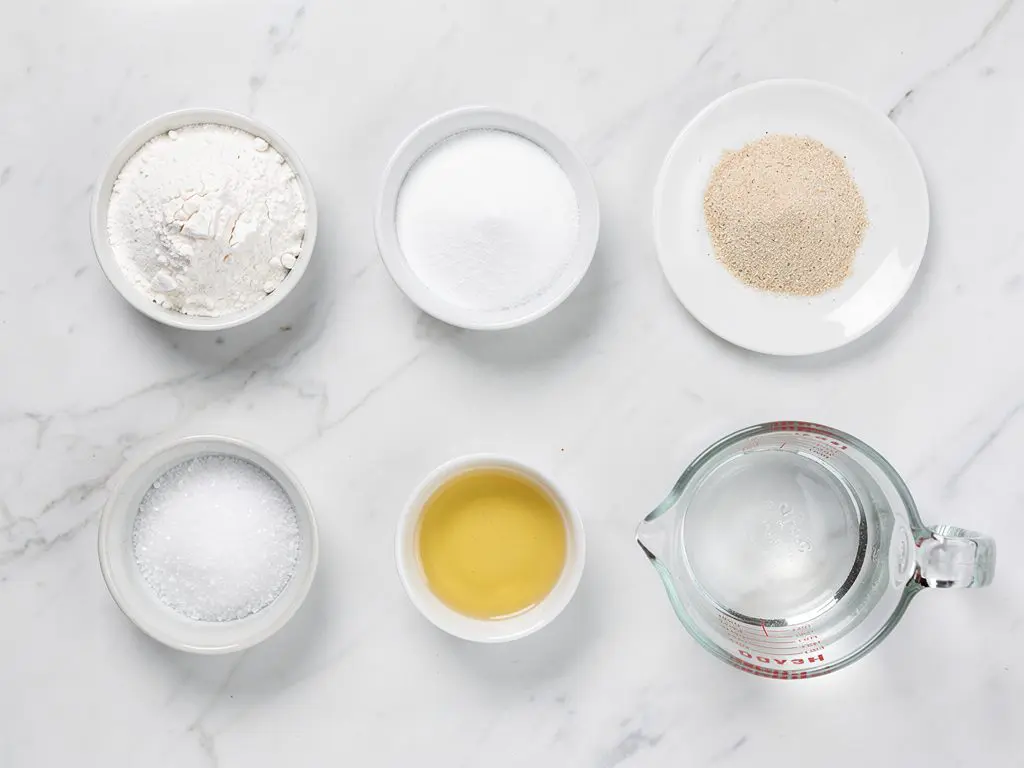
Ingredients
| Quantity | Ingredient | Oliver’s Notes |
|---|---|---|
| 1 cup (140g) | White rice flour | Superfine works best; avoid brown rice flour (too gritty) |
| ⅔ cup (100g) | Tapioca starch (tapioca flour) | NOT cornstarch—tapioca provides the stretch |
| 1 tbsp (10g) | Psyllium husk powder | Must be finely ground powder, not whole husks |
| ¾ tsp (4g) | Fine sea salt | Table salt works; avoid coarse kosher (uneven distribution) |
| 3 tbsp (42g) | Neutral oil (avocado, grapeseed, or vegetable) | Olive oil works but adds flavor; coconut oil makes them less pliable |
| 1 cup (240ml) | Hot water (180-200°F / 82-93°C) | Temperature matters—too cool won’t gelatinize the starches |
Essential Tools
- Digital Kitchen Scale: Precision is non-negotiable in gluten-free chemistry. Hydration ratios must be exact; scooping flour with a cup can add 30% more starch, resulting in dry, cracking tortillas. Weighing ensures success every time.
- Cast Iron Skillet: Thermal mass is the secret to the “puff.” Unlike non-stick pans that lose heat quickly, cast iron maintains the high 400°F surface temperature needed to flash-cook the dough, keeping the inside steamy and soft.
- Tapered French Rolling Pin: Since this dough is more elastic than wheat dough, a tapered pin allows you to apply pressure precisely where needed to achieve that critical ⅛-inch thinness without tearing.
- Tortilla Press (Optional but Recommended): If you struggle with rolling even circles, a cast-iron press guarantees uniform thickness instantly. Uniform thickness means uniform cooking—no raw spots or burnt edges.
- Parchment Paper: Essential for transfer. Gluten-free dough is tacky; sandwiching it between parchment eliminates the need for excess dusting flour, which would dry out the surface and cause cracking.
As an Amazon Associate and affiliate partner, I earn from qualifying purchases at no extra cost to you.
How to Make Gluten-Free Flour Tortillas
Phase 1: Mix the Dry Ingredients
- Whisk together the white rice flour (140g), tapioca starch (100g), psyllium husk powder (10g), and salt (6g) in a large mixing bowl.
- Make sure there are no lumps in the psyllium husk powder—sift it if necessary.
- Visual cue: The mixture should look uniform and pale, like fine sand.
Phase 2: Create the Dough
- Create a well in the center of the dry ingredients and pour in the oil (42g).
- Heat the water to 180-200°F (82-93°C)—it should be hot to the touch but not boiling.
- Crucial Step: Pour the hot water into the well and immediately stir vigorously with a wooden spoon. Do not wait, or the psyllium will gel instantly, creating lumps.
- Mix for 30-45 seconds until a shaggy dough forms.
- Visual cue: The dough will look rough and sticky at first. Don’t panic if it looks wet—just keep mixing. As the psyllium hydrates over the next minute, it will suddenly come together into a cohesive ball.
Chef’s Note: If your dough feels too dry and crumbly after 1 minute of mixing, add water 1 tablespoon at a time. If it’s too sticky, add tapioca starch 1 teaspoon at a time. The ideal texture is like Play-Doh—smooth, pliable, and slightly tacky but not wet.
Phase 3: Rest the Dough
- Knead the dough in the bowl for 30 seconds to fully hydrate the psyllium.
- Cover the bowl with a damp kitchen towel and let it rest for 10 minutes.
- Why this matters: Resting allows the starches to fully absorb water and the psyllium gel to strengthen, making the dough easier to roll.
Phase 4: Portion and Roll
- Divide the dough into 8-10 equal portions (about 50g each for 6-inch tortillas).
- Roll each portion into a smooth ball between your palms.
- Place one dough ball between two sheets of parchment paper.
- Roll from the center outward, rotating the parchment 90° after each pass to maintain a circular shape.
- Aim for ⅛-inch thickness (about 3mm). Visual Match: The dough should be the thickness of a heavy coin (like a Quarter or a Euro coin). If it’s too thin, it won’t puff; too thick, and it will taste doughy inside.
- Visual cue: The tortilla should be nearly translucent when held up to light.
Phase 5: Cook the Tortillas
- Heat your cast-iron skillet or non-stick pan over medium-high heat. The Sizzle Test: Flick a drop of water into the pan. If it sizzles and evaporates immediately, it’s ready. If it sits there, the pan is too cold.
- Do NOT add oil to the pan—these cook dry. (Note: Only use a tiny brush of oil if you are using a sticky stainless steel pan).
- Peel the top parchment sheet off the rolled tortilla. Flip the tortilla onto your palm, then peel off the second parchment sheet.
- Gently lay the tortilla in the hot pan. Don’t worry if it wrinkles slightly when it hits the pan; it will smooth out as it puffs up.
- Cook for 45-60 seconds. You will see bubbles forming and the edges lifting.
- Flip and cook for another 30-45 seconds until light golden spots appear (the “leopard spots”).
- The Puff: If the temperature is correct, the tortilla should puff up (sometimes completely ballooning). This is the sign of a perfect, soft interior.
Phase 6: Keep Warm and Store
- Transfer cooked tortillas immediately to a clean kitchen towel.
- Fold the towel over to cover them—this traps steam and keeps them pliable.
- Stack cooked tortillas on top of each other inside the towel.
- Critical step: Do NOT skip the towel—exposed tortillas will dry out within 5 minutes.
Expert Tips for Success
- Master the “Goldilocks” Temperature: Too hot = burnt outside, raw inside. Too cool = dry cardboard. Your pan is ready when a flick of water sizzles and evaporates in exactly 2 seconds. Adjust heat incrementally between batches if needed.
- Cheat for Even Thickness: Uneven rolling is the #1 reason for failure (thick spots stay doughy, thin spots burn). I highly recommend using the Silicone Rolling Pin Rings set to ⅛-inch (3mm). They guarantee professional uniformity without any skill required.
- Beat the Gelation Clock: Psyllium creates a gel network that tightens over time. Work efficiently! Keep the main dough ball covered with a damp towel while rolling individual portions to prevent the surface from drying out (“elephant skin”).
- Wipe the Pan (Pro Tip): After every 2-3 tortillas, carefully wipe your skillet with a dry paper towel (use tongs!). Residual flour from previous batches will burn and create bitter black specs on your fresh tortillas.
- The “Steam Pocket” Sign: If your tortillas puff up like balloons, congratulations! You’ve trapped steam inside the gelatinized starch network. They will deflate as they cool, but this confirms your hydration and heat were scientifically perfect.
Variations & Add-Ins
- Vegan & Dairy-Free: This recipe is already 100% vegan, gluten-free tortillas—no eggs or dairy required.
- Herb-Infused: Add 2 teaspoons of dried cilantro, oregano, or garlic powder to the dry ingredients for flavored tortillas.
- Spinach Tortillas: Replace ¼ cup water with ¼ cup spinach puree for vibrant green tortillas (perfect for wraps).
- Grain-Free Option: Substitute the rice flour with cassava flour for a paleo-friendly version (note: texture will be slightly different).
- Larger Burrito-Size: Divide dough into 6 portions instead of 8-10 and roll to a 10-inch diameter. Increase cooking time by 15-20 seconds per side.
Serving Suggestions
These homemade gluten-free tortillas are incredibly versatile. Use them for classic tacos filled with seasoned ground beef and our Easy gluten-free Beef Chili for a double-down Tex-Mex feast. They’re perfect for breakfast burritos stuffed with scrambled eggs and cheese, or as a wrap for Mediterranean-style grilled vegetables and hummus.
For a complete gluten-free Mexican spread, pair with homemade guacamole, pico de gallo, and refried beans.
They also work beautifully as a substitute for traditional flatbreads in Mediterranean cuisine—try them alongside our gluten-free Pita Bread for a full flatbread experience. For quesadillas, fill with cheese and fold in half, cooking until crispy on both sides.
Storing & Freezing
Room Temperature: Store cooled tortillas in an airtight container or resealable plastic bag with a paper towel to absorb moisture. They’ll stay soft and pliable for up to 3 days on the counter.
Refrigerator: Tortillas will keep for 5-7 days refrigerated. Separate each tortilla with parchment paper to prevent sticking. Reheat for 10-15 seconds per side in a dry skillet before serving to restore pliability.
Freezer (Best Method): Stack tortillas with parchment paper between each one, then wrap the entire stack tightly in plastic wrap, followed by aluminum foil. Label with the date and freeze for up to 3 months. To thaw, remove the desired number of tortillas and let sit at room temperature for 30 minutes, or microwave for 15-20 seconds. The psyllium husk prevents ice crystal formation that ruins texture—these taste freshly made even after freezing.
Pro Tip: Freeze them already filled with your favorite ingredients (cooked and cooled) for grab-and-go breakfast burritos. Wrap individually and microwave for 2-3 minutes from frozen.
Estimated Nutrition
Per serving (1 tortilla, based on 10 tortillas):
| Nutrient | Amount |
|---|---|
| Calories | 110 kcal |
| Total Carbohydrates | 20g |
| Dietary Fiber | 2g |
| Sugars | 0g |
| Protein | 1g |
| Total Fat | 4g |
| Saturated Fat | 0.5g |
| Sodium | 235mg |
Nutritional estimates calculated by Glutenoo Test Kitchen based on ingredient analysis. Values may vary depending on specific brands used and portion sizes.
Troubleshooting Guide
| Problem | The Science (Why) | The Fix |
|---|---|---|
| Tortillas crack when folded | Insufficient hydration or psyllium gel didn’t fully develop | Add 1-2 tbsp more hot water next batch; let dough rest full 10 minutes |
| Dough is sticky and won’t roll | Too much water or humidity in flour | Add tapioca starch 1 tsp at a time; use parchment (never flour dust) |
| Tortillas are tough/chewy | Overcooked or pan temperature too low (causing moisture loss) | Increase heat; cook faster (30-45 sec per side); keep covered after cooking |
| Tortillas have raw spots | Uneven rolling thickness | Roll from center outward with consistent pressure; aim for uniform ⅛-inch thickness |
| Tortillas turn stiff after cooling | Not enough fat or exposed to air during cooling | Always wrap in towel immediately; increase oil to 4 tbsp in next batch |
| Dough won’t form a ball | Water wasn’t hot enough to activate psyllium and gelatinize starches | Use water at 180-200°F; add 2-3 tbsp more hot water and knead vigorously |
| Tortillas didn’t puff up | Pan wasn’t hot enough to create immediate steam pressure, or dough was rolled too thick | Perform “Sizzle Test” before cooking; ensure dough is coin-thin (⅛-inch) |
| Inside feels gummy or wet | Undercooked starches or eaten immediately while steam was still trapped | Cook 15-20 seconds longer per side; let them rest in the towel for 2 mins (carryover cooking finishes the center) |
FAQ
How to make gluten-free flour tortillas without psyllium husk?
You can substitute with 1½ teaspoons xanthan gum, though the texture won’t be quite as pliable. Xanthan creates a more rigid gel network compared to psyllium’s flexible matrix. Another option is chia seeds: grind 2 tablespoons of chia seeds into powder and let the dough rest for 15 minutes instead of 10 to allow full hydration. According to Beyond Celiac, psyllium remains the gold standard for replicating gluten’s extensibility in baked goods.
Can I make this easy gluten-free flour tortilla recipe without a rolling pin?
Absolutely! Use a tortilla press if you have one (spray or line with parchment). Alternatively, use a heavy-bottomed skillet or flat plate—place the dough ball between parchment sheets and press firmly with even pressure. You can also use a wine bottle or even your hands to pat the dough flat, though achieving uniform thickness takes more practice. The key is maintaining that critical ⅛-inch thickness for proper cooking.
What makes soft gluten-free flour tortillas stay flexible?
Three factors: (1) the psyllium husk creates a moisture-retaining gel that stays flexible even when cool, (2) the fat content (oil) lubricates starch granules and prevents them from bonding too tightly, and (3) the proper cooking time—overcooking evaporates too much moisture, causing brittleness. Storing them wrapped in a towel or an airtight container also prevents moisture loss. This is why our recipe specifically uses hot water to pre-gelatinize the tapioca starch tortilla component, creating a head start on that flexible texture.
Can I use this best gluten-free flour tortilla recipe to make chips?
Yes! Cut cooled tortillas into triangles, brush lightly with oil, sprinkle with salt, and bake at 350°F (175°C) for 10-12 minutes until crispy. You can also fry them in 350°F oil for 1-2 minutes per side. The psyllium actually helps chips hold their shape better than commercial versions. For extra flavor, dust with taco seasoning, nutritional yeast, or cinnamon-sugar before baking.
How many homemade gluten-free tortillas 5 ingredients, does this recipe make?
This recipe yields 8-10 tortillas at 6-7 inches in diameter, or 6 larger burrito-sized tortillas at 10 inches. Each tortilla weighs approximately 50g. If you need more, the recipe scales beautifully—just maintain the same ratios. For meal prep, I recommend making a double batch and freezing half, since the effort of rolling and cooking is essentially the same whether you make 10 or 20.
You May Also Like
- gluten-free Pita Bread Recipe Unlock 10 Tips for Perfect Texture – Another flatbread favorite that pairs perfectly with these tortillas for a complete bread basket.
- Easy gluten-free Beef Chili in 30 Min – The perfect filling for these tortillas, creating an unbeatable taco night.
- Homemade gluten-free Hamburger Buns Recipe – Master another essential gluten-free staple with the same science-backed approach.
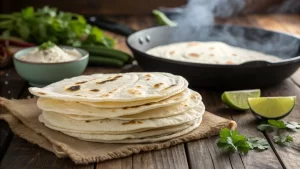
Easy Soft Gluten-Free Flour Tortillas
Equipment
- Digital Kitchen Scale
- Rolling Pin
- Parchment paper
- Cast Iron Skillet or Non-Stick Pan
- Kitchen Thermometer
- Tortilla Press Optional but Recommended
Ingredients
Main Ingredients
- 1 cup (140g) White rice flour Superfine works best; avoid brown rice flour (too gritty)
- ⅔ cup (100g) Tapioca starch (tapioca flour) NOT cornstarch—tapioca provides the stretch
- 1 tbsp (10g) Psyllium husk powder Must be finely ground powder, not whole husks
- ¾ tsp (4g) Fine sea salt Table salt works; avoid coarse kosher (uneven distribution)
- 3 tbsp (42g) Neutral oil (avocado, grapeseed, or vegetable) Olive oil works but adds flavor; coconut oil makes them less pliable
- 1 cup (240ml) Hot water (180-200°F / 82-93°C) Temperature matters—too cool won’t gelatinize the starches
Instructions
Phase 1: Mix the Dry Ingredients
- Whisk together the white rice flour (140g), tapioca starch (100g), psyllium husk powder (10g), and salt (6g) in a large mixing bowl.
- Make sure there are no lumps in the psyllium husk powder—sift it if necessary.
- The mixture should look uniform and pale, like fine sand.
Phase 2: Create the Dough
- Create a well in the center of the dry ingredients and pour in the oil (42g).
- Heat the water to 180-200°F (82-93°C)—it should be hot to the touch but not boiling.
- Crucial Step: Pour the hot water into the well and immediately stir vigorously with a wooden spoon. Do not wait, or the psyllium will gel instantly, creating lumps.
- Mix vigorously for 30-45 seconds until a shaggy dough forms.
- The dough will look rough and sticky at first, then suddenly come together into a cohesive ball as the psyllium activates.
Phase 3: Rest the Dough
- Knead the dough in the bowl for 30 seconds to fully hydrate the psyllium.
- Cover the bowl with a damp kitchen towel and let rest for 10 minutes.
- Resting allows the starches to fully absorb water and the psyllium gel to strengthen, making the dough easier to roll.
Phase 4: Portion and Roll
- Divide the dough into 8-10 equal portions (about 50g each for 6-inch tortillas).
- Roll each portion into a smooth ball between your palms.
- Place one dough ball between two sheets of parchment paper.
- Roll from the center outward, rotating the parchment 90° after each pass to maintain a circular shape.
- Aim for ⅛-inch thickness (about 3mm). Visual Match: The dough should be the thickness of a heavy coin (like a Quarter or a Euro coin). If it's too thin, it won't puff; too thick, and it will taste doughy inside.
- The tortilla should be nearly translucent when held up to light.
Phase 5: Cook the Tortillas
- Heat your cast-iron skillet or non-stick pan over medium-high heat. The Sizzle Test: Flick a drop of water into the pan. If it sizzles and evaporates immediately, it's ready. If it sits there, the pan is too cold.
- Do NOT add oil to the pan—these cook dry. (Note: Only use a tiny brush of oil if you are using a sticky stainless steel pan).
- Peel the top parchment sheet off the rolled tortilla. Flip the tortilla onto your palm, then peel off the second parchment sheet.
- Gently lay the tortilla in the hot pan. Don't worry if it wrinkles slightly when it hits the pan; it will smooth out as it puffs up.
- Cook for 45-60 seconds. You will see bubbles forming and the edges lifting.
- Flip and cook for another 30-45 seconds until light golden spots appear (the "leopard spots").
- The Puff: If the temperature is correct, the tortilla should puff up (sometimes completely ballooning). This is the sign of a perfect, soft interior.
Phase 6: Keep Warm and Store
- Transfer cooked tortillas immediately to a clean kitchen towel.
- Fold the towel over to cover them—this traps steam and keeps them pliable.
- Stack cooked tortillas on top of each other inside the towel.
- Critical step: Do NOT skip the towel—exposed tortillas will dry out within 5 minutes.