Easy Gluten-Free Beef Stew (Slow Cooker!)
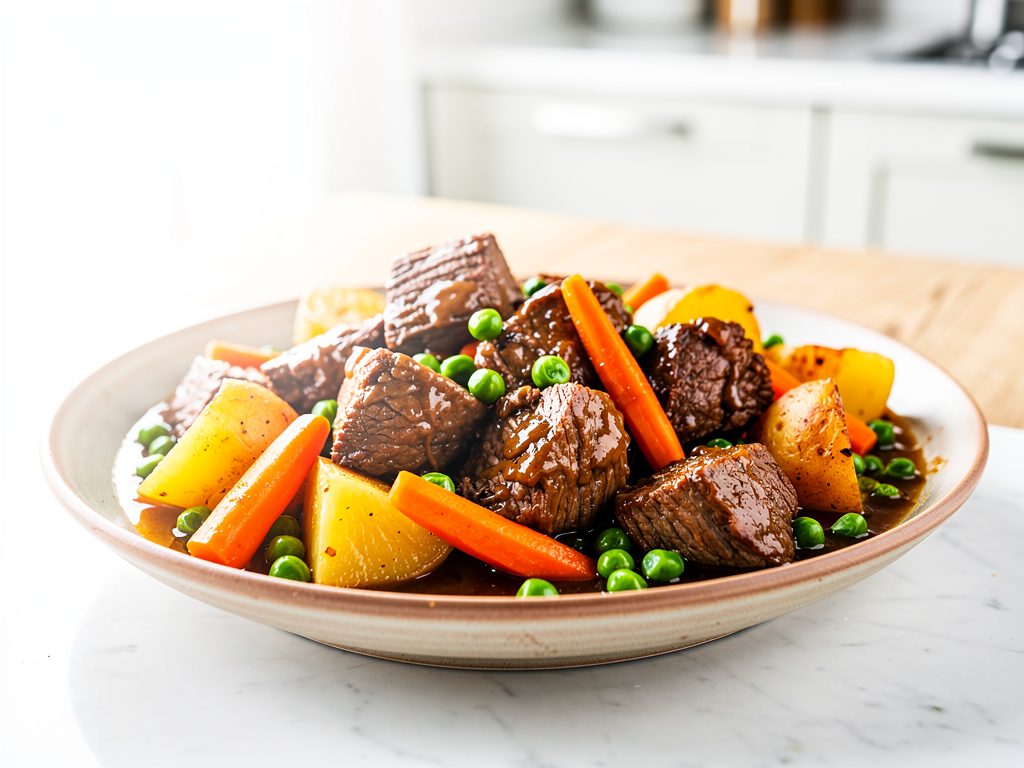
gluten-free beef stew. Most slow cooker beef stews turn out watery, bland, or loaded with gluten-hiding ingredients like wheat flour thickeners. As someone who’s tested over 200 gluten-free comfort food recipes in the Glutenoo Test Kitchen, I understand the frustration of watching a promising stew fall apart—literally. This gluten-free beef stew solves every common problem: it’s rich, deeply flavored, and thickens perfectly without a single grain of wheat. Total time? Just 15 minutes of active prep, then your slow cooker does the work for 6-8 hours while you go about your day. Whether you’re managing celiac disease or simply avoiding gluten, this recipe delivers the kind of hearty, soul-warming comfort you deserve.
Table of Contents
Why This Gluten-Free Beef Stew Works
| Typical GF Beef Stew | Glutenoo Version |
|---|---|
| Watery broth with floury aftertaste | Silky, glossy gravy from cornstarch slurry science |
| Tough, chewy beef chunks | Fork-tender beef from low-temperature collagen breakdown |
| Mushy vegetables with no texture | Perfectly cooked potatoes and carrots (added at strategic times) |
| Hidden gluten in store-bought broth | Certified gluten-free beef broth with flavor-boosting umami |
The Science Behind Perfect Slow Cooker Beef Stew:
- Chuck Roast = Collagen Goldmine: Beef stew meat (specifically chuck) contains connective tissue that breaks down into gelatin at 160-180°F over 6+ hours, creating that luxurious, unctuous texture.
- Cornstarch Slurry Advantage: Unlike wheat flour (which needs fat to activate and can taste raw), a cornstarch slurry added at the end creates crystal-clear, glossy gravy without any cereal flavor.
- Maillard Reaction Matters: Searing beef before slow cooking triggers the Maillard reaction—amino acids and sugars create hundreds of new flavor compounds that store-bought rotisserie shortcuts can’t replicate.
- Gluten-Free Beef Broth Certification: Many broths use barley malt or wheat-based additives. We call for certified GF broth (look for <20 ppm gluten) to protect celiac readers.
- Staggered Vegetable Additions: Root vegetables, such as potatoes, require the full cooking time, but delicate herbs are added during the last 30 minutes to preserve their volatile oils.
🧪 Oliver’s Science Tip
“Did you know? Cornstarch thickens at a lower temperature (around 203°F) than wheat flour (around 212°F), which means your slow cooker’s residual heat will activate the slurry perfectly without breaking down its structure. This ensures a stable, velvety gravy that won’t separate or thin out when reheated.”

Ingredients
| Quantity | Ingredient | Oliver’s Notes |
|---|---|---|
| 2 lbs (900g) | Beef stew meat (chuck roast, cubed) | Choose well-marbled chunks—fat = flavor + tenderness |
| 2 tbsp (30ml) | Avocado oil (or olive oil) | High smoke point for searing without burning |
| 1 large (200g) | Yellow onion, diced | Adds natural sweetness as sugars caramelize |
| 4 cloves (12g) | Garlic, minced | Fresh only—powdered won’t bloom properly |
| 4 cups (960ml) | Certified Gluten-Free Beef Broth | Check label for <20 ppm certification |
| 2 tbsp (30ml) | Tomato paste | Concentrated umami bomb—no substitutions |
| 1 tbsp (15ml) | Gluten-Free Worcestershire Sauce | Lea & Perrins is GF in the USA; verify label |
| 2 tsp (4g) | Dried thyme | Herbaceous backbone; fresh = 2 tbsp |
| 2 (20g) | Bay leaves | Remove before serving—bitter if broken |
| 1 lb (450g) | Yukon Gold potatoes, cubed (1-inch) | Waxy texture holds shape better than russets |
| 3 medium (225g) | Carrots, sliced (1-inch rounds) | Uniform size = even cooking |
| 2 ribs (150g) | Celery, chopped | Aromatic trio with onion + carrot |
| 3 tbsp (24g) | Cornstarch | For the slurry—never add dry to hot liquid |
| 3 tbsp (45ml) | Cold water | Mix with cornstarch to prevent clumping |
| To taste | Sea salt and black pepper | Season at the end—broth reduces and intensifies |
| 2 tbsp (8g) | Fresh parsley, chopped | Brightens richness; add just before serving |
Essential Tools
- 6-Quart Slow Cooker: The standard size for this recipe’s volume. I recommend this programmable 6-quart Crock-Pot because it automatically switches to “Warm” once cooking is done, preventing your stew from drying out if you get stuck in traffic.
- 12-Inch Cast Iron Skillet: Nonstick pans don’t get hot enough to create a proper crust. I use this pre-seasoned Lodge cast iron skillet because it retains intense heat, ensuring your beef sears beautifully instead of steaming.
- Digital Kitchen Scale: Weighing meat and vegetables ensures consistent results batch after batch. I rely on this digital scale for precision.
- Instant-Read Thermometer: Optional but helpful. To guarantee fall-apart tenderness without guessing, check that the beef reaches 190-205°F with this instant-read thermometer.
- Fine-Mesh Strainer: If you want ultra-smooth gravy, strain the liquid before adding the cornstarch slurry.
As an Amazon Associate and affiliate partner, I earn from qualifying purchases at no extra cost to you.
How to Make Easy Gluten-Free Beef Stew (Slow Cooker!)
Phase 1: Sear the Beef (The Flavor Foundation)
Chef’s Note: Don’t skip the searing step! This creates a flavor base that hours of slow cooking can’t replicate. The fond (browned bits) stuck to the pan is pure umami gold.
- Pat the beef stew meat completely dry with paper towels. Moisture is the enemy of a good sear—wet meat steams instead of browning.
- Heat 2 tablespoons of avocado oil in your cast-iron skillet over medium-high heat until shimmering (about 375°F if you have an infrared thermometer).
- Working in two batches to avoid overcrowding, add beef cubes in a single layer. Let them sit undisturbed for 3-4 minutes until a deep mahogany crust forms.
- Flip and sear the second side for another 3 minutes. You’re not cooking the beef through—just building that Maillard crust.
- Transfer seared beef to your slow cooker insert. Repeat with the remaining beef, adding a touch more oil if the pan looks dry.
Phase 2: Build the Aromatics
- Reduce skillet heat to medium. Add diced onion to the beef drippings (don’t wipe the pan—that fond is flavor).
- Sauté for 4-5 minutes, scraping up those browned bits with a wooden spoon, until onions turn translucent and edges start to caramelize.
- Add minced garlic and cook for 60 seconds until fragrant. Garlic burns quickly, so watch carefully.
- Stir in tomato paste and cook for 2 minutes, allowing it to caramelize slightly and lose its raw acidity. The paste should darken to a brick-red color.
- Pour in 1 cup of the gluten-free beef broth, scraping vigorously to deglaze every bit of fond. This liquid is now a concentrated flavor bomb.
- Pour the entire onion-broth mixture into the slow cooker over the beef.
Phase 3: Assemble the Slow Cooker
- Add the remaining 3 cups of gluten-free beef broth to the slow cooker.
- Stir in Worcestershire sauce, dried thyme, and nestle the bay leaves into the liquid.
- Add the cubed potatoes, carrot rounds, and chopped celery. Give everything a gentle stir to distribute ingredients—the beef should be mostly submerged.
- Place the lid on the slow cooker. Set to LOW and cook for 6-8 hours, or HIGH for 4-5 hours. Low and slow is ideal for maximum tenderness.
- At the 6-hour mark (low setting), check beef tenderness. It should shred easily with a fork. If not, continue cooking for another hour.
Phase 4: Thicken with Cornstarch Slurry
- In a small bowl, whisk together 3 tablespoons of cornstarch and 3 tablespoons of cold water until completely smooth with no lumps. This is your slurry.
- Remove bay leaves from the stew and discard.
- With the slow cooker still on, slowly drizzle the cornstarch slurry into the stew while stirring constantly. You’ll see the liquid begin to thicken almost immediately.
- Cover and cook on HIGH for an additional 15-20 minutes. The gravy will transform from thin broth to silky, coat-the-back-of-a-spoon consistency.
- Taste and adjust seasoning with sea salt and freshly cracked black pepper. The broth concentrates during cooking, so you likely need less salt than you think.
- Stir in fresh chopped parsley just before serving for a pop of color and fresh herbaceous note.
Expert Tips for Success
- Meat Matters: Avoid pre-packaged “stew meat” that’s often trimmed too lean. Buy a 2-lb chuck roast and cube it yourself—you control the marbling and size (aim for 1.5-inch chunks).
- Don’t Peek: Every time you lift the slow cooker lid, you release 20-30 minutes’ worth of accumulated heat and steam. Resist the urge until the minimum cook time.
- Acidity Balance: If your stew tastes flat despite seasoning, add 1 teaspoon of red wine vinegar or lemon juice at the end. Acid brightens rich, fatty dishes and makes flavors pop.
- Instant Pot Adaptation: For a pressure cooker version (best gluten-free beef stew instant pot method), sear on Sauté mode, then pressure cook on High for 35 minutes with natural release. Thicken with slurry in Sauté mode after.
Variations & Add-Ins
- Dairy-Free Beef Stew: This recipe is already dairy-free! Many traditional stews add butter or cream at the end, but the cornstarch slurry creates richness without any dairy.
- Extra Vegetables: Add 1 cup frozen peas or green beans during the last 30 minutes for color and nutrition. Delicate vegetables turn mushy if added too early.
- Red Wine Depth: Replace 1 cup of beef broth with dry red wine (check GF certification). The tannins add complexity and help tenderize beef further.
- Mushroom Umami: Stir in 8 oz sliced cremini mushrooms with the onions. Their glutamates amplify the savory depth exponentially.
- Sweet Potato Swap: Replace Yukon Golds with sweet potatoes for a subtly sweet, vitamin-A-rich twist. They break down slightly more, creating a thicker stew naturally.
Serving Suggestions
This hearty gluten-free beef stew shines as a one-bowl meal, but a few strategic pairings elevate it to dinner party status. Serve over creamy mashed potatoes or alongside our fluffy gluten-free buttermilk biscuits for sopping up every drop of that silky gravy. For a lighter option, ladle the stew over cauliflower rice or serve with a crisp green salad dressed in sharp vinaigrette to cut the richness. If you’re planning a full comfort food spread, pair it with homemade gluten-free Southern cornbread—the slightly sweet crumb contrasts beautifully with the savory stew. A sprinkle of extra fresh parsley or a few thyme leaves on top adds restaurant-level presentation with zero effort.
Storing & Freezing
Refrigerator Storage: Cool the gluten-free crockpot beef stew to room temperature (no more than 2 hours in the “danger zone” of 40-140°F). Transfer to airtight containers and refrigerate for up to 4 days. The flavors actually deepen overnight as the spices meld, making leftovers even better than day one.
Freezing: This stew is freezer-friendly for up to 3 months. Portion into individual servings in freezer-safe containers, leaving 1 inch of headspace for expansion. Label with the date and contents. To reheat, thaw overnight in the refrigerator, then warm gently on the stovetop over medium-low heat, stirring occasionally. Add a splash of gluten-free beef broth if the gravy has thickened too much during storage—cornstarch-thickened sauces can tighten when chilled but loosen perfectly with gentle heat and a bit of liquid.
Pro Tip: Freeze the stew in gallon-sized freezer bags laid flat for space-saving storage. Once frozen solid, you can stack them like files in your freezer.
Estimated Nutrition (Per Serving, Recipe Yields 6 Servings)
| Nutrient | Amount |
|---|---|
| Calories | 385 kcal |
| Total Carbohydrates | 28g |
| Protein | 34g |
| Total Fat | 14g |
| Saturated Fat | 4g |
| Dietary Fiber | 4g |
| Sugars | 5g |
| Sodium | 720mg |
Estimates by Glutenoo Test Kitchen based on standard ingredient databases. Actual nutrition may vary depending on specific brands and modifications. For medical nutrition therapy, consult a registered dietitian.
Troubleshooting Guide
| Problem | The Science (Why) | The Fix |
|---|---|---|
| Beef is tough and chewy | Collagen needs 6+ hours at low temp to convert to gelatin. High heat or short cook times seize proteins. | Return to slow cooker on LOW for another 1-2 hours. Check at 30-minute intervals. |
| Gravy is too thin | Insufficient cornstarch or slurry added while liquid was too cool. | Make a fresh slurry (2 tbsp cornstarch + 2 tbsp water), ensure stew is simmering, then whisk in. |
| Gravy is lumpy | Cornstarch added dry or slurry wasn’t mixed thoroughly before adding. | Strain gravy through fine-mesh sieve into a pot, whisk vigorously, or use immersion blender on lumps only. |
| Vegetables are mushy | Cell walls break down completely after 8+ hours on low heat. | Next time, add potatoes/carrots at the 4-hour mark (low setting) or use larger 2-inch chunks. |
| Stew tastes bland | Under-seasoning or lack of acidity to balance richness. Slow cooking mutes flavors. | Add salt incrementally, then 1 tsp vinegar or lemon juice. Taste after each addition until flavors “pop.” |
| Meat didn’t brown during searing | Pan wasn’t hot enough, meat was wet, or pieces were overcrowded (causing steaming). | Pat meat drier next time, heat pan until oil shimmers, work in small batches with space between pieces. |
FAQ: gluten-free Beef Stew Slow Cooker Recipe
Can I make this gluten-free beef stew slow cooker recipe the night before?
Yes! Prep all ingredients the night before: sear the beef, sauté the aromatics, and chop the vegetables. Store everything in separate airtight containers in the refrigerator. In the morning, simply dump everything into your slow cooker insert, add the liquids, and set it to cook. This “dump and go” method saves 15 minutes on busy mornings. The only step you cannot do ahead is adding the cornstarch slurry—that must happen at the end of cooking for proper thickening.
What’s the best gluten-free beef broth to use?
For this easy homemade gluten-free beef stew, I recommend Kitchen Basics Unsalted Beef Stock (certified gluten-free, <20 ppm) or Pacific Foods Organic Beef Broth (also certified GF). Avoid brands that list “natural flavors” without GF certification—those can hide barley malt. If you have time, homemade bone broth adds incredible richness and is naturally gluten-free.
How do I adapt this for an Instant Pot (best gluten-free beef stew instant pot method)?
For pressure cooker perfection: Use the Sauté function on High to sear beef and cook aromatics exactly as written. Add all vegetables, broth, and seasonings to the pot. Seal the lid, set the valve to Sealing, and cook on High Pressure for 35 minutes. Let the pressure release naturally for 15 minutes, then quick-release any remaining steam. Remove the lid, switch back to Sauté mode, and stir in the cornstarch slurry. Simmer for 3-5 minutes until thickened. Total active time is under 30 minutes, making this the fastest route to tender, hearty gluten-free crockpot beef stew with potatoes.
Is this hearty gluten-free beef stew recipe dairy-free?
Absolutely! This is a naturally dairy-free beef stew—no butter, cream, or cheese required. The cornstarch slurry creates a rich, velvety texture without any dairy products, making it safe for those with lactose intolerance or dairy allergies. If you’re following multiple allergen restrictions, verify that your Worcestershire sauce is not only gluten-free but also dairy-free (most are, but some artisan brands add anchovy paste processed with dairy equipment). For more dairy-free comfort food inspiration, check out our gluten-free dairy-free mac and cheese guide.
Is this hearty gluten-free beef stew recipe dairy-free?
Absolutely! This is a naturally dairy-free beef stew—no butter, cream, or cheese required. The cornstarch slurry creates a rich, velvety texture without any dairy products, making it safe for those with lactose intolerance or dairy allergies. If you’re following multiple allergen restrictions, verify that your Worcestershire sauce is not only gluten-free but also dairy-free (most are, but some artisan brands add anchovy paste processed with dairy equipment). For more dairy-free comfort food inspiration, check out our gluten-free dairy-free mac and cheese guide.
Can I freeze gluten-free beef stew with potatoes?
Yes, with one caveat: potatoes can become slightly grainy when frozen due to their high water content and starch structure breaking down. For the best texture, consider freezing the stew without potatoes, then adding freshly cooked potatoes when you reheat. Alternatively, use Yukon Golds (as in this recipe) instead of russets—their waxy texture holds up better to freezing than starchy varieties. Freeze in portions for up to 3 months, thaw overnight in the fridge, and reheat gently on the stovetop with a splash of broth.
You May Also Like
- gluten-free Chicken Noodle Soup 8 Ways to Make It Extra Flavorful
- 5 Secrets to the Perfect Gluten-Free French Onion Soup
- Gluten-Free Meatloaf Recipe: 3 Must-Know Tips for Success
This gluten-free beef stew proves that avoiding gluten doesn’t mean sacrificing the soul-warming comfort of classic slow-cooked dishes. With scientifically-tested techniques—proper searing for the Maillard reaction, strategic vegetable timing, and a foolproof cornstarch slurry—you’ll achieve restaurant-quality results from your slow cooker every single time. Whether you’re managing celiac disease, gluten sensitivity, or simply exploring cleaner eating, this recipe delivers tender, fall-apart beef in a silky, richly flavored gravy that happens to be naturally dairy-free. The best part? Your kitchen will smell incredible while you go about your day, and dinner practically makes itself. From the Glutenoo Test Kitchen to your table, here’s to proof that gluten-free cooking can be just as satisfying—if not more so—than the original.

Easy Gluten-Free Beef Stew (Slow Cooker!)
Equipment
- 6-Quart Slow Cooker (Crock Pot)
- Digital Kitchen Scale
- 12-Inch Cast Iron Skillet
- Instant Read Thermometer
- Fine-Mesh Strainer
Ingredients
Main Ingredients
- 2 lbs Beef stew meat (chuck roast, cubed) Choose well-marbled chunks—fat = flavor + tenderness
- 2 tbsp Avocado oil (or olive oil) High smoke point for searing without burning
- 1 large Yellow onion, diced Adds natural sweetness as sugars caramelize
- 4 cloves Garlic, minced Fresh only—powdered won’t bloom properly
- 4 cups Gluten-free beef broth Check label for <20 ppm certification
- 2 tbsp Tomato paste Concentrated umami bomb—no substitutions
- 1 tbsp Worcestershire sauce (GF) Lea & Perrins is GF in the USA; verify label
- 2 tsp Dried thyme Herbaceous backbone; fresh = 2 tbsp
- 2 Bay leaves Remove before serving—bitter if broken
- 1 lb Yukon Gold potatoes, cubed (1-inch) Waxy texture holds shape better than russets
- 3 medium Carrots, sliced (1-inch rounds) Uniform size = even cooking
- 2 ribs Celery, chopped Aromatic trio with onion + carrot
- 3 tbsp Cornstarch For the slurry—never add dry to hot liquid
- 3 tbsp Cold water Mix with cornstarch to prevent clumping
- To taste Sea salt and black pepper Season at the end—broth reduces and intensifies
- 2 tbsp Fresh parsley, chopped Brightens richness; add just before serving
Instructions
Phase 1: Sear the Beef (The Flavor Foundation)
- Pat the beef stew meat completely dry with paper towels. Moisture is the enemy of a good sear—wet meat steams instead of browning.
- Heat 2 tablespoons of avocado oil in your cast iron skillet over medium-high heat until shimmering (about 375°F if you have an infrared thermometer).
- Working in two batches to avoid overcrowding, add beef cubes in a single layer. Let them sit undisturbed for 3-4 minutes until a deep mahogany crust forms.
- Flip and sear the second side for another 3 minutes. You’re not cooking the beef through—just building that Maillard crust.
- Transfer seared beef to your slow cooker insert. Repeat with remaining beef, adding a touch more oil if the pan looks dry.
Phase 2: Build the Aromatics
- Reduce skillet heat to medium. Add diced onion to the beef drippings (don’t wipe the pan—that fond is flavor).
- Sauté for 4-5 minutes, scraping up those browned bits with a wooden spoon, until onions turn translucent and edges start to caramelize.
- Add minced garlic and cook for 60 seconds until fragrant. Garlic burns quickly, so watch carefully.
- Stir in tomato paste and cook for 2 minutes, allowing it to caramelize slightly and lose its raw acidity. The paste should darken to a brick-red color.
- Pour in 1 cup of the gluten-free beef broth, scraping vigorously to deglaze every bit of fond. This liquid is now a concentrated flavor bomb.
- Pour the entire onion-broth mixture into the slow cooker over the beef.
Phase 3: Assemble the Slow Cooker
- Add the remaining 3 cups of gluten-free beef broth to the slow cooker.
- Stir in Worcestershire sauce, dried thyme, and nestle the bay leaves into the liquid.
- Add the cubed potatoes, carrot rounds, and chopped celery. Give everything a gentle stir to distribute ingredients—the beef should be mostly submerged.
- Place the lid on the slow cooker. Set to LOW and cook for 6-8 hours, or HIGH for 4-5 hours. Low and slow is ideal for maximum tenderness.
- At the 6-hour mark (low setting), check beef tenderness. It should shred easily with a fork. If not, continue cooking another hour.
Phase 4: Thicken with Cornstarch Slurry
- In a small bowl, whisk together 3 tablespoons cornstarch and 3 tablespoons cold water until completely smooth with no lumps. This is your slurry.
- Remove bay leaves from the stew and discard.
- With the slow cooker still on, slowly drizzle the cornstarch slurry into the stew while stirring constantly. You’ll see the liquid begin to thicken almost immediately.
- Cover and cook on HIGH for an additional 15-20 minutes. The gravy will transform from thin broth to silky, coat-the-back-of-a-spoon consistency.
- Taste and adjust seasoning with sea salt and freshly cracked black pepper. The broth concentrates during cooking, so you likely need less salt than you think.
- Stir in fresh chopped parsley just before serving for a pop of color and fresh herbaceous note.