Easy Gluten-Free Smoked Turkey Black-Eyed Peas
There’s an old Southern saying: “Eat poor on New Year’s Day, and you’ll eat rich the rest of the year.” That’s why black-eyed peas—representing coins—have graced tables across the South every January 1st for generations.
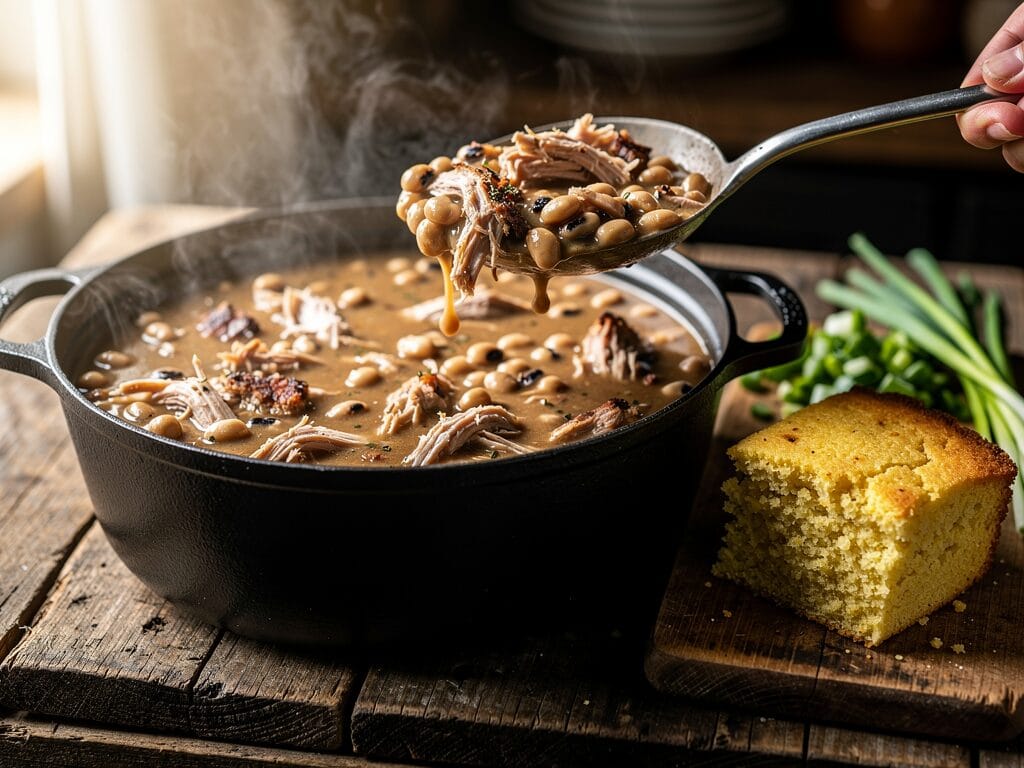
At the Glutenoo Test Kitchen, we’ve taken this beloved New Year’s tradition and created a gluten-free version that actually delivers more flavor than the original. Our gluten-free smoked turkey black-eyed peas use smoked turkey wings instead of ham hocks, creating a cleaner, smokier pot liquor with incredible depth.
The secret? The natural collagen from turkey bones transforms into gelatin during simmering, providing you with that coveted creamy broth without any added thickeners. Whether you’re cooking these for good luck or simply craving comforting Southern food, this recipe delivers restaurant-quality results in about 2 hours of gentle simmering.
Table of Contents
Why This Recipe Works
Traditional Southern black-eyed peas rely on pork for flavor, but we’ve engineered a superior alternative. Here’s the science-backed comparison:
| Factor | Ham Hocks (Traditional) | Smoked Turkey Wings (Glutenoo Choice) |
|---|---|---|
| Smoke Flavor | Heavy, sometimes overpowering | Clean, balanced smoke profile |
| Collagen Content | Moderate | High (skin + connective tissue) |
| Fat Content | Very high, requires skimming | Moderate, self-regulating |
| Meat Yield | Low (mostly bone/fat) | High (generous meat portions) |
| Gluten Risk | Medium (curing processes vary) | Low (naturally gluten-free) |
The Science Behind the Creamy Broth:
- Collagen Conversion: Smoked turkey wings contain abundant collagen in their skin and joints. During the long simmer, heat breaks down collagen into gelatin molecules that disperse throughout the liquid.
- Natural Thickening: Gelatin molecules trap water, creating that signature silky mouthfeel in the pot liquor without any gluten-containing flour or cornstarch.
- Flavor Extraction: The gentle heat extracts water-soluble compounds from the smoked turkey, infusing every bean with deep, smoky flavor.
- Bean Breakdown: Some peas naturally rupture during cooking, releasing their starches to further enhance the creamy broth consistency.
🧪 Oliver’s Science Tip: The Collagen Factor
“Did you know? Smoked turkey wings have a higher ratio of skin and connective tissue to meat compared to ham. When simmered, this tissue converts into gelatin. This natural gelatin gives the ‘pot liquor’ (the broth) a rich, silky mouthfeel without needing any flour or cornstarch thickeners.”
Ingredients
| Quantity | Ingredient | Oliver’s Notes |
|---|---|---|
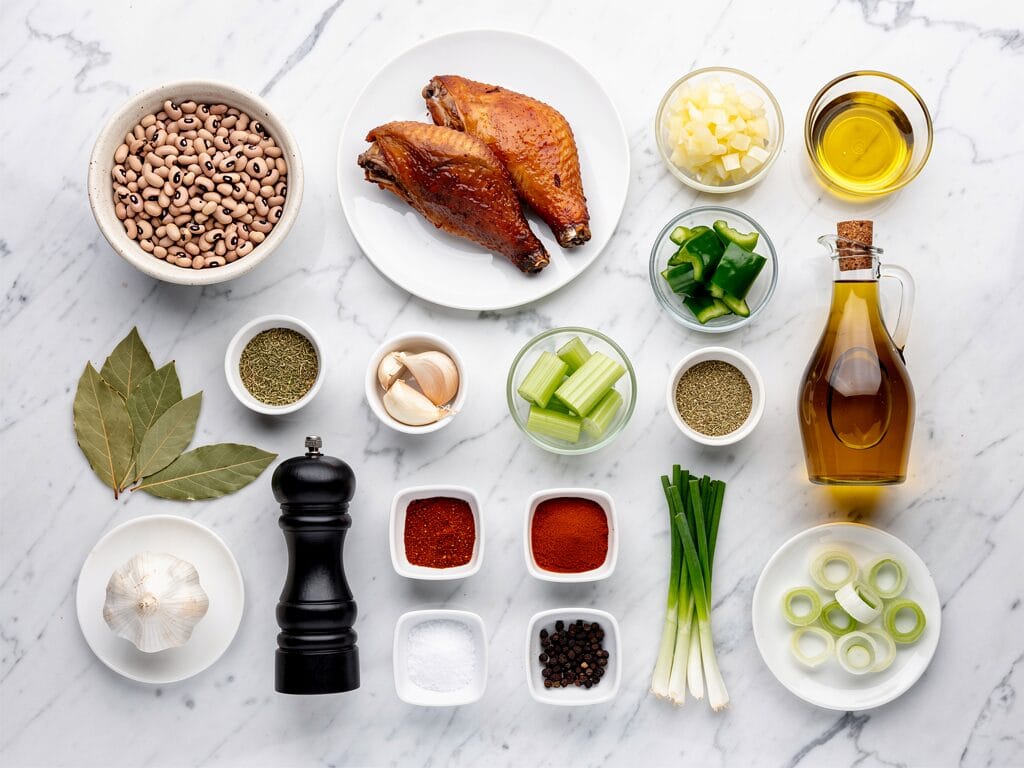
| 1 lb | Dried black-eyed peas | Pick through for stones; fresher beans cook faster |
| 2-3 lbs | Smoked turkey wings or smoked turkey necks | Wings have more meat; necks have more collagen |
| 1 large | Yellow onion, diced | Sweet onions work beautifully here |
| 1 medium | Green bell pepper, diced | The “Holy Trinity” starts here |
| 3 ribs | Celery, diced | Adds aromatic depth |
| 4 cloves | Garlic, minced | Fresh only—no powder for this |
| 2 bay leaves | Bay leaves | Turkish bay has a sweeter note than California |
| 1 tsp | Dried thyme | Or 3 sprigs fresh |
| ½ tsp | Smoked paprika | Reinforces the smokiness |
| ¼ tsp | Cayenne pepper (optional) | Adjust to heat preference |
| 6 cups | Water or low-sodium chicken broth | Broth adds richness; water lets smoke shine |
| 2 tbsp | Olive oil or avocado oil | For sautéing aromatics |
| To taste | Salt and black pepper | Add salt AFTER beans soften |
| 1 tbsp | Apple cider vinegar | Brightens flavors at the finish |
| 2-3 | Green onions, sliced | For garnish and a fresh bite |
Essential Tools
- Dutch Oven (6-8 quart): Cast iron retains heat beautifully for even simmering. Enameled versions prevent reactivity with acidic ingredients.
- Large Colander: For rinsing peas and draining soaking water.
- Sharp Chef’s Knife: Clean cuts on aromatics ensure even cooking.
- Wooden Spoon: Won’t scratch your pot and allows you to feel the bottom for sticking.
- Tongs or Slotted Spoon: For removing turkey pieces to shred the meat.
- Fat Separator (Optional): If you prefer a leaner broth, though some fat carries flavor.
How to Make Gluten-Free Smoked Turkey Black-Eyed Peas
Phase 1: Preparing the Peas
- Sort and Rinse: Spread the dried black-eyed peas on a clean kitchen towel. Pick through them carefully to remove any small stones, debris, or shriveled peas. Transfer to a colander and rinse under cold running water until the water runs clear.
- Soak (Optional but Recommended): Place peas in a large bowl and cover with 3 inches of cold water. Let soak for 6-8 hours or overnight at room temperature. This reduces cooking time by about 30 minutes and improves digestibility. Quick Soak Method: Alternatively, bring peas and water to a boil for 2 minutes, then remove from heat, cover, and let stand for 1 hour before draining.
- Drain and Set Aside: Drain the soaked peas in a colander. Discard the soaking water (it contains indigestible sugars). Rinse once more with fresh water.
Phase 2: Building the Flavor Base
- Heat the Dutch Oven: Place your Dutch oven over medium heat. Add 2 tablespoons of olive oil and let it shimmer (about 1 minute). The oil should flow easily but not smoke.
- Sauté the Aromatics: Add the diced onion, bell pepper, and celery to the pot. Cook, stirring occasionally, for 5-7 minutes until the vegetables soften and the onion becomes translucent. You’re looking for gentle caramelization, not browning.
- Add Garlic and Spices: Stir in the minced garlic, smoked paprika, thyme, and cayenne (if using). Cook for 1 minute, stirring constantly, until fragrant. The heat activates the essential oils in these aromatics.
Phase 3: The Simmer
- Add Turkey and Peas: Nestle the smoked turkey wings into the pot. Pour in the drained black-eyed peas, distributing them evenly around the turkey. Add the bay leaves.
- Add Liquid: Pour in 6 cups of water or broth. The liquid should cover the peas and turkey by about 1 inch. If needed, add a bit more water. Do not add salt yet—salt can toughen bean skins if added too early.
- Bring to a Boil: Increase heat to high and bring the mixture to a rolling boil. You’ll see vigorous bubbles breaking the surface. This should take 5-7 minutes.
- Reduce and Simmer: Once boiling, reduce the heat to low. The surface should show just gentle, lazy bubbles—this is a proper simmer. Partially cover the pot with the lid (leave it slightly ajar to allow steam to escape and prevent overflow).
- Cook Until Tender: Simmer for 1.5 to 2 hours, stirring every 30 minutes to prevent sticking. The peas are done when they’re tender but not mushy—they should hold their shape but yield easily when pressed with a spoon. The broth will reduce and thicken naturally as the collagen from the turkey converts to gelatin.
Chef’s Note: If your peas are still firm after 2 hours, they may be old. Add ½ cup more hot water and continue simmering in 15-minute intervals. Avoid adding cold water, which will stop the cooking process.
Phase 4: The Finish
- Remove Turkey: Use tongs to carefully remove the smoked turkey wings from the pot. Place them on a cutting board and let them cool for 5-10 minutes until safe to handle.
- Shred the Meat: Once cooled, pull the meat from the bones using your fingers or two forks. Discard the skin, bones, and cartilage (or save bones for stock). Chop or shred the turkey meat into bite-sized pieces.
- Season and Return Meat: Return the shredded turkey to the pot. Now is the time to add salt—start with 1 teaspoon, stir well, and taste. Add more as needed. The smoked turkey provides some saltiness, so go gradually. Season with freshly ground black pepper to taste.
- Add Acidity: Stir in 1 tablespoon of apple cider vinegar. This brightens all the flavors and balances the richness. Taste again and adjust seasoning if needed.
- Final Simmer: Let the peas simmer for an additional 10 minutes to allow the turkey to warm through and flavors to meld. If the consistency is too thick, add a splash of hot water. If it’s too thin, simmer uncovered for 10-15 minutes to concentrate.
- Rest: Remove from heat and let the pot rest, covered, for 10 minutes. The flavors will continue to develop, and the broth will thicken slightly as it cools.
Serving
- Garnish and Serve: Ladle the gluten-free smoked turkey black-eyed peas into bowls. Top with sliced green onions for a fresh, sharp contrast. Serve hot with your favorite sides (see suggestions below).
Expert Tips for Success
- Don’t Salt Early: Salt interferes with the hydration of dried beans, keeping the skins tough. Always add salt after the peas are tender.
- Monitor Liquid Levels: Check the pot every 30 minutes. If the liquid drops below the level of the peas, add hot water ½ cup at a time.
- Skim Fat (Optional): Some smoked turkey releases excess fat. If you see a thick layer forming on the surface, skim it with a spoon. A thin layer adds flavor and is desirable.
- Taste the Pot Liquor: The broth should be deeply flavorful on its own. If it tastes weak, simmer uncovered for 15 minutes to concentrate, or add ½ teaspoon of gluten-free chicken bouillon.
- Use Fresh Spices: Dried herbs lose potency after 6 months. Fresh thyme can be substituted at a 3:1 ratio (3 teaspoons fresh = 1 teaspoon dried).
- Let It Rest: Like all braises, these no pork black eyed peas taste even better the next day after the flavors have married in the refrigerator.
- Texture Preference: For creamier peas, mash about ¼ of them against the side of the pot with your spoon during the final 10-minute simmer. This releases starches that thicken the broth naturally.
Pressure Cooker / Instant Pot Variation
For those seeking convenience, these easy gluten-free southern black-eyed peas, smoked turkey no pork can be made in an Instant Pot or pressure cooker:
- Sauté Mode: Use the “Sauté” function to cook the aromatics and spices as directed in Phase 2
- Add Ingredients: Add the turkey wings, drained peas, bay leaves, and 5 cups of liquid (reduce by 1 cup since there’s less evaporation).
- Pressure Cook: Secure the lid and set the valve to “Sealing.” Cook on High Pressure for 25 minutes for soaked peas, or 35 minutes for unsoaked peas.
- Natural Release: When the timer beeps, allow the pressure to release naturally for 15 minutes, then carefully quick-release any remaining pressure.
- Finish: Remove the turkey, shred the meat, and return it to the pot. Season with salt, pepper, and vinegar as directed. Use the “Sauté” function to simmer for 5-10 minutes if you want a thicker consistency.
- Time Savings: Total active time is under 1 hour using this method.
Serving Suggestions
To honor the full New Year’s tradition, serve your gluten-free New Year’s black-eyed peas with smoked turkey alongside these symbolic sides:
Cornbread (The Gold): Black-eyed peas represent coins, so pair them with golden Gluten-Free Cornbread to symbolize gold. The sweet, crumbly texture is perfect for soaking up that rich pot liquor. According to Southern Living, this pairing represents the full spectrum of prosperity.
Rice (Hoppin’ John Style): For a traditional “Hoppin’ John,” serve the peas over a bed of fluffy white rice. The combination is classic Low Country cuisine.
Collard Greens (The Money): Greens represent paper money in Southern New Year’s superstition. Their deep color and slightly bitter flavor balance the earthy sweetness of the peas.
Hot Sauce Bar: Set out bottles of Louisiana-style hot sauce, Texas Pete, or Tabasco so guests can customize their heat level.
Pickled Onions or Chow-Chow: A tangy, acidic condiment cuts through the richness beautifully.
Storing & Freezing
Refrigeration: Store cooled black-eyed peas in an airtight container in the refrigerator for up to 5 days. The flavors actually improve after 24 hours as the spices permeate the beans. Reheat gently on the stovetop over low heat, adding a splash of water or broth if the mixture has thickened.
Freezing: These crockpot black eyed peas (or stovetop versions) freeze exceptionally well. Cool completely, then transfer to freezer-safe containers or heavy-duty freezer bags. Leave 1 inch of headspace for expansion. Freeze for up to 3 months. Thaw overnight in the refrigerator, then reheat on the stovetop.
Texture Note: The peas may become slightly softer after freezing and reheating. This doesn’t affect flavor—in fact, some prefer the creamier texture.
Portioning Tip: Freeze in 2-cup portions for quick weeknight meals. Thaw and serve over rice or with a fried egg for a protein-packed lunch.
Estimated Nutrition (Per 1.5-Cup Serving)
| Nutrient | Amount | % Daily Value* |
|---|---|---|
| Calories | 285 | 14% |
| Total Fat | 6g | 8% |
| Saturated Fat | 1.5g | 8% |
| Cholesterol | 55mg | 18% |
| Sodium | 520mg | 23% |
| Total Carbohydrates | 32g | 12% |
| Dietary Fiber | 8g | 29% |
| Sugars | 3g | — |
| Protein | 24g | 48% |
| Iron | 3.2mg | 18% |
| Potassium | 580mg | 12% |
*Percent Daily Values based on a 2,000-calorie diet. Estimates by Glutenoo Test Kitchen. Actual nutrition will vary based on specific ingredients and portion sizes.
Nutritional Highlights: This recipe is exceptionally high in protein (24g per serving) and fiber (8g), making it a satisfying, gut-healthy meal. The combination of legumes and poultry provides all essential amino acids. Black-eyed peas are also rich in folate, thiamine, and manganese.
Troubleshooting Guide
| Problem | The Science (Why) | The Fix |
|---|---|---|
| Beans are still hard after 2 hours | Old beans lose moisture over time and take longer to rehydrate. Acidic ingredients or salt added too early can also toughen skins. | Add ½ cup hot water and continue simmering. Next time, buy fresher beans and skip the vinegar until the end. |
| Broth is too watery | Insufficient collagen extraction or too much liquid added. | Remove lid and simmer for 15-20 minutes to reduce. Mash ¼ of the peas to release starch and thicken naturally. |
| Broth is too thick/gluey | Over-reduction or excessive gelatin from very collagen-rich turkey parts. | Thin with hot water or broth, ¼ cup at a time, until the desired consistency is reached. |
| Tastes bland | Underseasoning or using low-quality smoked turkey without enough smoke penetration. | Add more salt gradually. Boost with ½ tsp smoked paprika or a dash of liquid smoke. The vinegar at the end is crucial for brightness. |
| Too salty | Smoked turkey can be heavily salted during processing. | Add 1-2 cups unsalted broth or water and a peeled, halved potato. Simmer 20 minutes (potato absorbs salt), then remove the potato. |
| Beans are mushy | Overcooked or vigorous boiling instead of gentle simmering. | Can’t reverse, but use them for a soup base or mash into a dip. Next time, reduce the heat and check tenderness at 90 minutes. |
| Excessive foam on the surface | Proteins and starches from beans are released during the initial boil. | Completely normal. Skim with a spoon if desired, but it will incorporate back into the broth and add body. |
Frequently Asked Questions
Do I Really Have to Soak Black-Eyed Peas?
No, soaking is optional. Unlike larger beans (kidney, navy), black-eyed peas have thinner skins and cook relatively quickly, even when unsoaked. However, soaking offers benefits: it reduces cooking time by 30-40 minutes, improves digestibility by breaking down oligosaccharides (the complex sugars that cause gas), and results in more evenly cooked beans. If you skip soaking, simply add 30 minutes to the simmering time and use an extra cup of liquid.
Is This Recipe Spicy?
Not inherently. The cayenne pepper is optional and provides only mild heat at the listed amount (¼ teaspoon). The smoked paprika adds smokiness, not spice. If you want more heat, increase cayenne to ½ teaspoon or add hot sauce at the table. For a completely mild version, omit the cayenne entirely—the dish will still be deeply flavorful from the smoked turkey and aromatics.
Can I Use Smoked Turkey Legs Instead of Wings?
Absolutely. Smoked turkey legs, smoked turkey necks, or even a combination work beautifully. Legs have more meat, making them ideal if you want generous turkey portions in the final dish. Necks have more bone and connective tissue, producing an exceptionally rich, gelatinous broth. Wings strike a nice balance. Use 2-3 pounds of whichever cut you prefer.
Where Do I Find Smoked Turkey Parts?
Most major grocery stores sell smoked turkey wings or drumsticks in the meat department, often near the ham and sausages. They’re especially abundant around Thanksgiving and New Year’s. If unavailable fresh, check the freezer section. International or Southern specialty markets almost always carry them. Online retailers like Amazon also ship smoked turkey parts.
Is This Actually Gluten-Free?
Yes, when made as written, this recipe is naturally gluten-free. Black-eyed peas, fresh vegetables, and most smoked turkey are inherently gluten-free. However, always verify labels on smoked turkey products, as some manufacturers use marinades or processing aids containing gluten. Look for packages labeled “gluten-free” or check the ingredient list for wheat, barley, or rye derivatives. When in doubt, contact the manufacturer.
Why Does the Recipe Say “No Pork”?
Traditional Southern black-eyed peas are made with pork products like ham hocks, salt pork, or bacon. This recipe uses smoked turkey instead, making it suitable for those who avoid pork for dietary, religious, or health reasons. According to food historians at History.com, the New Year’s tradition itself doesn’t require pork—it’s the black-eyed peas that carry the symbolism of good luck and prosperity.
Can I Make This Vegetarian?
While it would no longer be this specific recipe, you can create a vegetarian version by omitting the turkey and using vegetable broth. Add 2 tablespoons of smoked paprika and 1 teaspoon of liquid smoke to replicate the smoky depth. For the body, add 1 tablespoon of tomato paste and consider including a piece of kombu (dried kelp) during simmering, which adds umami and minerals.
What’s “Pot Liquor” and Can I Drink It?
Pot liquor (sometimes spelled “potlikker”) is the nutrient-rich broth left after cooking greens, beans, or other vegetables in Southern cuisine. It’s packed with vitamins, minerals, and flavor extracted during cooking. Yes, you can absolutely drink it! Many Southerners soak cornbread in pot liquor or sip it like a savory tea. It’s considered one of the most nutritious parts of the meal.
You May Also Like
- Homemade Gluten-Free Southern Cornbread – The essential companion to your black-eyed peas, representing gold in the New Year’s prosperity tradition.
- Gluten Free Mac and Cheese: 3 Mistakes That Ruin the Taste – Another comforting Southern-inspired side that pairs beautifully with black-eyed peas.
- Gluten Free Chicken Noodle Soup: 8 Ways to Make It Extra Flavorful – If you love the deep, simmered flavors in this recipe, you’ll appreciate our approach to classic chicken soup.
Easy Gluten-Free Smoked Turkey Black-Eyed Peas
Equipment
- Dutch Oven (6-8 quart)
- Large Colander
- Sharp Chef’s Knife
- Wooden Spoon
- Tongs or Slotted Spoon
- Fat Separator (Optional)
Ingredients
Main Ingredients
- 1 lb Dried black-eyed peas Pick through for stones; fresher beans cook faster
- 2-3 lbs Smoked turkey wings or smoked turkey necks Wings have more meat; necks have more collagen
- 1 large Yellow onion, diced Sweet onions work beautifully here
- 1 medium Green bell pepper, diced The “Holy Trinity” starts here
- 3 ribs Celery, diced Adds aromatic depth
- 4 cloves Garlic, minced Fresh only—no powder for this
- 2 Bay leaves Turkish bay has a sweeter note than California
- 1 tsp Dried thyme Or 3 sprigs fresh
- ½ tsp Smoked paprika Reinforces the smokiness
- ¼ tsp Cayenne pepper (optional) Adjust to heat preference
- 6 cups Water or low-sodium chicken broth Broth adds richness; water lets smoke shine
- 2 tbsp Olive oil or avocado oil For sautéing aromatics
- To taste Salt and black pepper Add salt AFTER beans soften
- 1 tbsp Apple cider vinegar Brightens flavors at the finish
- 2-3 Green onions, sliced For garnish and fresh bite
Instructions
Phase 1: Preparing the Peas
- Sort and rinse the dried black-eyed peas, picking through them carefully to remove any small stones, debris, or shriveled peas. Transfer to a colander and rinse under cold running water until the water runs clear.
- Soak the peas in a large bowl covered with 3 inches of cold water for 6-8 hours or overnight at room temperature. Alternatively, use the quick soak method by bringing peas and water to a boil for 2 minutes, then removing from heat, covering, and letting stand for 1 hour before draining.
- Drain the soaked peas in a colander. Discard the soaking water and rinse once more with fresh water.
Phase 2: Building the Flavor Base
- Heat the Dutch oven over medium heat. Add 2 tablespoons of olive oil and let it shimmer (about 1 minute).
- Sauté the diced onion, bell pepper, and celery in the pot, cooking until the vegetables soften and the onion becomes translucent, about 5-7 minutes.
- Stir in the minced garlic, smoked paprika, thyme, and cayenne (if using). Cook for 1 minute, stirring constantly, until fragrant.
Phase 3: The Simmer
- Nestle the smoked turkey wings into the pot. Pour in the drained black-eyed peas, distributing them evenly around the turkey. Add the bay leaves.
- Pour in 6 cups of water or broth, ensuring the liquid covers the peas and turkey by about 1 inch. Do not add salt yet.
- Bring the mixture to a rolling boil, then reduce heat to low for a gentle simmer. Partially cover the pot with the lid, leaving it slightly ajar to allow steam to escape and prevent overflow.
- Simmer for 1.5 to 2 hours, stirring every 30 minutes to prevent sticking. The peas are done when they’re tender but not mushy.
Phase 4: The Finish
- Remove the smoked turkey wings from the pot and let cool. Once cooled, pull the meat from the bones, discarding the skin, bones, and cartilage. Chop or shred the turkey meat into bite-sized pieces.
- Return the shredded turkey to the pot. Add salt, starting with 1 teaspoon, and stir well. Taste and add more salt as needed. Season with freshly ground black pepper to taste.
- Stir in 1 tablespoon of apple cider vinegar. Let the peas simmer for an additional 10 minutes to allow the turkey to warm through and flavors to meld.
- Remove from heat and let the pot rest, covered, for 10 minutes. The flavors will continue to develop, and the broth will thicken slightly as it cools.